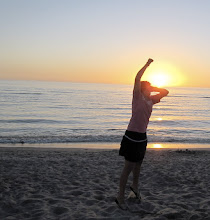
After about two weeks, my days in Granada became pleasantly routine. Up at 9, class at 9:30, out at half past 12. I used the time between the end of class and lunch at 3:30 to wander, sometimes stumbling upon a funky clothing store or, more interestingly, a fruteria with unidentifiable produce. Sometimes I would sit in the Puerta Real, one of the main plazas, and attempt to translate the slang which uniquely-dressed teenagers use in everyday conversation. After a leisurely lunch, my siesta would last until around 6, when I would either meet the group for an activity or go out for helado. Before doing either of these, I liked to employ the use of the fascinating coffee maker for a small, intense cup of (decaf) joe. Carmen’s son had to show me how to use it because before I realized its use, I had no clue as to what kind of kitchen appliance it actually is. The coffee and the water go in the bottom half, and as it brews, the liquid defies gravity flowing up the skinny spout. The dark coffee then spills out of the holes of the spout and into the top part of the machine. What’s left is an intense drink, screaming for sugar and milk. Great after a siesta!
My favorite group activities of the second half of the program were seeing a Spanish movie, going to an Arab teteria, playing soccer under the million-degree sun on a concrete field, seeing a Flamenco show in a very neat area of the city, and having a “mid-term party” in Amalia (the program director)’s penthouse. The movie we saw was a comedy called “Fuera de Carta,” or “Outside the menu.” The title has multiple meanings, as the plot followed the complicated life of a gay chef. I understood about half of the words, but all of the emotion. Slapstick humor defies language barriers!
The Arab teteria where I had the most watery chocolate “milkshake” ever, was located in El Albaicin, the last remaining Arab neighborhood in Granada. There are a few, dimly-lit, Arabian-themed teterias in this area. Most have similar menus of about fifty different types of tea, juices, overpriced food, and these “milkshakes,” that I continue to put in quotes because they are only milkshakes in name. I ordered the fab-sounding chocolate banana shake. But, what came was a glass of milk with a little Ovaltine-type powder, and hints of banana pulp. Other girls who fell for the same trick, expecting a cool-me-down ice cream drink, were also disappointed. Next time I’ll get tea.
The sun was so bright when we played soccer last week that I sweated my sunglasses off my nose. That was a little gross. Sorry.
The Dean of the College of Arts and Sciences at Simmons, Diane Raymond, came for a short visit to see the program and meet the faculty. The second night she was here, we went to see a Flamenco show and have tapas afterward. The theater was in Sacromonte, the old gypsy neighborhood. Sacromonte is located on the side of a mountain filled with caves. Many years ago, the government pushed the gypsies to this area and they built houses around the caves. It has since been gentrified due to the wonderful location and view of the Alhambra. Chic restaurants, hotels, Flamenco theaters, and some residences now take up most of the mountainside. The gypsies have again been relocated.
The Flamenco was fun and lively, with much less group dancing than I thought. The climax of the performance is when the two best female dancers, the singer, and the Spanish guitar player stand in the middle of the stage in a half circle, improvising. One girl dances for a while, as the others cheer her on. Then, the next one dances completely different. Finally, the singer takes center stage and belts out his song. Every night, this part of the show is new, as it’s mostly improvisation. We went on a good night J.
To celebrate Dean Raymond’s presence, we had the traditionally end-of-program party in the middle. Amalia lives in an amazing penthouse apartment with a lovely balcony where we could look out over the city. She and her husband prepared a wonderful meal, beginning with olives, Manchego, and San Moreno soup, which is like gazpacho, but blended with bread to make it very thick and rich. Spanish tortilla, tuna empanada, salad, roasted peppers, bread, and Moroccan-spiced chicken made up the meal. Dessert was a soft almond cake and flan.
As I’m mentioning sweets, I believe now is a fine time to comment on Spanish desserts. To be honest, I just don’t think they are that good. Sure, I love the helado, but the pastries? Not so much. The cookies seem a little dry, the cakes could use more flavor, and oftentimes I think flan needs more oomph, like a kick of liquor or heavy syrup. The exceptions to this generalization make me change my mind, but they are so rare. I’ll stick to the cheese platter for dessert here.
Thursday, June 26, 2008

Thursday, June 12, 2008


Out and About in Granada
 Dinner on the first night: boiled shrimp, fried shrimp with tomatoes, Spanish tortilla (potato omelette), ham platter, fried potatoes with peppers and poached eggs on top, salad with cheese and dried fruit, and fried croquettes
 The back of the Cathedral in Granada
 One view of the Alhambra
 Inside the Alhambra
 Inside the Alhambra looking out over Granada
Monday, June 9, 2008
In Arabic, "Qurtuba"
Our only stop en route to Cordoba last Friday was at one of approximately three rest stops we passed on the 2.5-hour drive. Only about six hours after some of the girls had gotten home the night before, the brightly colored bus reminiscent of summer camp transportation came to a stop no less than two feet in front of a sleeping dog in the parking lot. The change in motion woke most of us and the promise of a bathroom lured the rest. We luckily arrived a crucial five minutes before a crowd of "viejos," or old people, spilled out of another bus. Often, it's great to be tall, but not when tough grannies two-thirds my height throw an elbow to my side in order to cut in line. A friend and I have officially concluded that the viejos in Spain completely disregard line formation (we aren't in India, people!), are particularly pushy, and can get borderline violent in public places. I'm not saying I'm going to be the kind old women who let's people step all over me or needs a young person to walk me across the street. However, as that "joven" willing to let my elders pass me in line with a simple "Puedo ir primer?," I expect a bit more than strategic physical maneuvers from people thrice my age (or *gasp* older!).
Anyway, I thankfully secured a decent spot in the bathroom line, but did walk away with a mild bruise in my side. Shouts of, "figs, almonds, very good!" and free samples of the two consoled my trauma from the viejos. We took breakfast in a spectacular setting amongst rolling hills of olive trees. The whole group of nineteen basked in the strong sun at our long table in the parking lot. We ate tostada- half of a toasted demi baguette or small ciabatta loaf split lengthwise, topped with olive oil made from the trees surrounding us and crushed tomatoes- and washed it down with cafe con leche, and bright, flavorful freshly-squeezed zumo de naranja made with Valencia oranges. It was the best damn breakfast I've ever had at a truck stop.
Cordoba is the sunniest city I've visited in Spain, with an amazing Mediterranean climate that allowed me to wear my sunglasses all day. We spent most of our time in the old part of the city, a once Jewish neighborhood defined by maze-like streets on a diet, rather plain white or brick buildings, and lots of tourist junk. La Sinagoga was our first stop, the ancient synagogue located very close to the sight of the old marketplace, now filled with artisan shops. We saw stunning royal gardens lined with colorful flowers, fish ponds, and peaceful fountains, said to appeal to each of the five senses. My favorite place was La Mezquita, the second largest mosque in the world built under Islamic rule. Under Chirstian rule, however, the mosque became a cathedral and today, the mix of Islamic and Catholic architecture creates a unique religious sanctuary. In one part, you could mistake the ornate paintings of angels on the ceiling for the Sistine Chapel. Throughout the building, traditional Arab design of tall, open arches makes it hard to forget who were the original builders. Being able to say, "I'm going to Mass at the mosque" is only possible in a country with such a rich history of theocracy.
The sites we visited were in wonderful condition, as the city is competing for the title of Cultural Capitol in 2016. An honor amongst historical cities, especially those with UNESCO World Heritage designation, like Cordoba. "Cordoba 2016" banners are plastered across the city, but from what I saw, the sites speak loudly for themselves.
Anyway, I thankfully secured a decent spot in the bathroom line, but did walk away with a mild bruise in my side. Shouts of, "figs, almonds, very good!" and free samples of the two consoled my trauma from the viejos. We took breakfast in a spectacular setting amongst rolling hills of olive trees. The whole group of nineteen basked in the strong sun at our long table in the parking lot. We ate tostada- half of a toasted demi baguette or small ciabatta loaf split lengthwise, topped with olive oil made from the trees surrounding us and crushed tomatoes- and washed it down with cafe con leche, and bright, flavorful freshly-squeezed zumo de naranja made with Valencia oranges. It was the best damn breakfast I've ever had at a truck stop.
Cordoba is the sunniest city I've visited in Spain, with an amazing Mediterranean climate that allowed me to wear my sunglasses all day. We spent most of our time in the old part of the city, a once Jewish neighborhood defined by maze-like streets on a diet, rather plain white or brick buildings, and lots of tourist junk. La Sinagoga was our first stop, the ancient synagogue located very close to the sight of the old marketplace, now filled with artisan shops. We saw stunning royal gardens lined with colorful flowers, fish ponds, and peaceful fountains, said to appeal to each of the five senses. My favorite place was La Mezquita, the second largest mosque in the world built under Islamic rule. Under Chirstian rule, however, the mosque became a cathedral and today, the mix of Islamic and Catholic architecture creates a unique religious sanctuary. In one part, you could mistake the ornate paintings of angels on the ceiling for the Sistine Chapel. Throughout the building, traditional Arab design of tall, open arches makes it hard to forget who were the original builders. Being able to say, "I'm going to Mass at the mosque" is only possible in a country with such a rich history of theocracy.
The sites we visited were in wonderful condition, as the city is competing for the title of Cultural Capitol in 2016. An honor amongst historical cities, especially those with UNESCO World Heritage designation, like Cordoba. "Cordoba 2016" banners are plastered across the city, but from what I saw, the sites speak loudly for themselves.
Saturday, June 7, 2008
Friday Night Fun
Not that some people need any sort of excuse to bar hop (I’m not referring to myself here), last weekend gave those of us who do strong reason to join the Spaniards and have a night on the town. Of course we ate dinner at an hour usually past my bedtime, so my flatmate (another girl in the program) and I met the group around 11:30 and arrived at the first bar fifteen minutes later. Much to my dismay, the general consensus was to begin at Hannigan’s, an Irish pub near the school. I wasn’t in complete approval because a. Irish pubs are EVERYWHERE and b. the idea of trading precious sleep time in return for being able to speak English (which I continue to refuse to do) to other Americans was simply not worth it. I tagged along anyway, with the promise that we could move on from there if it wasn’t enjoyable. Believe it or not, it wasn’t, enjoyable that is (perhaps because I rebelled and didn’t partake in the whole drinking part…that’s not the point, is it?)! So, six of the seventeen girls decided to head someplace a tad more authentic than Guinness posters and MTV music videos. It was a gorgeous night, so we wandered around the city for a while, baffled by the families out for ice cream and the strolling couples of seventy-somethings out so late. As we passed through one of the main plazas where we gobbled up churros y chocolate a few days earlier- long, crispy, unsweetened pieces of fried dough dipped in a mug of warm, pudding-like chocolate great for drinking once the churros are gone- we came upon one of those huge white tents that people rent for outdoor parties. Crowds inside and outside the tent signified some sort of good time. We stopped and observed the “type” of party-goers and could not figure out who this fiesta was geared toward. Some wore elegant black tie, while others looked like students in jeans and t-shirts. At this point, I decided we were not too underdressed to crash it, but only one other girl would join me. We passed a quick two hours keeping to ourselves under the tent amongst chic Spanish-speakers. It turned out to be the sight of the opening night gala for the Southern Spain film festival currently in Granada through this coming weekend. Somehow we fit right in amongst the wide range of eccentric, posh, casual, and generally interesting movie-lovers. I like to think the party was open to the public because it was smack in the middle of a central plaza and no one questioned our entrance a bit. We enjoyed the free concessions, consuming everything from veg sushi to bites of pates to chocolate-covered cream puffs and pineapple cheese cake for dessert. Both drinks I had were non-alcoholic flavored sugar syrups from the Indian food table. One closely resembled a mojito, but tasted like heavily sweetened mint sugar water (a mixer, perhaps?) and I could have sworn the other was sangria until one sip told me it was the sweetest pomegranate juice I’ve ever had (maybe in honor of the film fest location- Granada means fruit from a pomegranate tree). The back of the huge tent was blocked off and reserved for a screening. The next day, the other girls were jealous of our fun, free night with the movie buffs, so we vowed to see one of the films in the coming week.
Wednesday, June 4, 2008
Week in Review, Cont.
The daily activities have been the highlight of my days, besides Gustavo’s class. Here is what I’ve been up to in Granada and beyond:
Monday was our city orientation and tour. Ready with our confusing maps, we set out with Teresa, the young and fun program assistant who leads the activities every day. We got a good feel for some of the historic places around the city, including a giant statue of Christopher Columbus presenting his plan to Isabel. While I enjoy questioning Mr. Columbus’ motives, I wouldn’t do so too loudly in the company of proud Spaniards. Our first tour taught me one very important thing about wandering through the city: never get lost. The place is a maze of ups and downs (the city was built on neighboring mountains) and my thighs hurt just thinking about being lost in certain areas. The worst time to be lost in Granada would be between the hours of 2 and 5 when everyone is inside. I would much rather be lost at 2 in the AM because the shopkeepers and the families taking the kids for ice cream would be happy to help me.
Tuesday was our big afternoon out to the Alhambra. MarieCarmen was our knowledgeable, but crazed tour guide who was more than a little bit stressed by the crowds and the thought of our group being separated. Our visit defined the “hurry up and wait” lifestyle, as we would rush through an atrium to get to the garden where we would wait for other groups to pass, then rush off again. It was kind of fun being herded like that. The last time I was in fieldtrip mode was my senior year in high school when the last thing I wanted to do was have someone tell me where to go when. So glad those days and that ‘tude are gone.
The Alhambra is reason enough to brave the mobs that frequent its lovely grounds. Room after room of intricate tile, carved wood, complex hot water systems, baths, and domed ceilings prove that modern architects could learn a lot from our ancestors. The gorgeous gardens filling the courtyards and spilling down the mountainside are breathtaking. It was a wonderful excursion, even if we had only 1.5 minutes in selected locations to take pictures, we had to run part of the time, and I didn’t understand much of the lecture. Spectacular centuries-old fortresses don’t get much better than this.
Wednesday- Thursdays are usually our futbol days, but because we will have all of Thursday in Seville, we got a chance to scope out the fields today. We didn’t play because we didn’t have a reservation. The few soccer fields are in high demand. Instead, our group simply enjoyed the pleasant walk across the city and through a park to La Universidad de Granada’s sports area. Teresa warned us that soccer is still considered a men’s sport here (sorry, Mia Hamm), so we shouldn’t be surprised if guys make comments about us playing. The only girls on the fields when we stopped by were giggling groups of spectators. *sigh* Middle school returns.
Thursday- Met at the bus stop in the city center at 7:30 AM. I feel much less secure at this hour than at 2 or 3 in the morning, as the only other people on the street were a few city workers. I braved the five minute walk, and 3 hours and one breakfast stop later, we arrived in Sevilla (Say-vee-yuh). Our one stop was at a place with an unforgettable motto, “con la sabor de la trucha.” As shown by the aquatic decorations throughout the interior, the literal translation is “with the flavor of the trout.” Now I don’t think this motto is an idiom and actually has another meaning because there were plastic trout on the walls, trout pictures on the napkins, and a big trout on the sign out front. Oddly enough, the truck stop was in the middle of olive tree farms, not on a river. Anywho, I now think truck stops in the middle of nowhere can provide a fascinating look into a culture that more modern or touristy places cannot. Just imagine that gas station you stopped at on a long car ride. It probably had little to no seating, no freshly-cooked food (microwaved pre-packaged cheeseburgers don’t count), no olive oil selection, no “artisan handicraft” section, and no life-sized paper mache bull and bull fighter in a makeshift ring. Sad, isn’t it? Thankfully Trout made up for all of this and provided us with an interesting look into the typical road trip in Spain. Are we there yet?
Sevilla, the capitol of Andalusia, is larger than Granada with a recently modernized downtown. The system of public transportation is an almost silent above ground trolley. The roads the trolley travels on are solely for pedestrians and bikers, who must pay attention at all times because the system is so quiet it can cause accidents with those who don’t hear it. We passed the day sightseeing at the gorgeous Cathedral with a courtyard of orange trees in the middle. Interestingly enough, the oranges on the trees which also line the streets in Sevilla and Granada, are too bitter to eat. They are shipped to England to make marmalade once ripe.
Next came a two-hour lunch break for our 5-course meal at a touristy, yet fun place near the Cathedral. We started with Manchego cheese, local olives, crusty bread, and tinto del verano- a half red wine, half sparkling water drink which some of the girls at another table enjoyed so much, they decided to tell us from across the dining room (because we couldn’t tell from their loud laughter). The second course was two different types of yummy fried calamari. My favorite parts are the long strips, sliced from the body of the larger creatures, rather than the tentacle bunches. Next came a big salad, followed by vegetarian paella (to accommodate everyone’s eating restrictions). Dessert was una natilla, a soft cinnamon-vanilla custard with a cookie on top. After all of that, we toured the Real Alcazar, an ancient Moorish fort, and its beautiful gardens. Amalia gave us a brief overview of Spanish history and architecture in the city, including the evolution through Moorish, Andalusian, and Christian influence. We had a bit of free time before we joined up at the highly recognizable meeting spot: Starbucks. Teresa was excited for her caramel frap, which cost a mere $6 USD. The prices were the same numeric amounts as in the States, but in Euros. $4 for a small coffee, anyone? Even with the caffeine kick from the pricey coffee, the bus on the way home was as silent as the public transport.
Monday was our city orientation and tour. Ready with our confusing maps, we set out with Teresa, the young and fun program assistant who leads the activities every day. We got a good feel for some of the historic places around the city, including a giant statue of Christopher Columbus presenting his plan to Isabel. While I enjoy questioning Mr. Columbus’ motives, I wouldn’t do so too loudly in the company of proud Spaniards. Our first tour taught me one very important thing about wandering through the city: never get lost. The place is a maze of ups and downs (the city was built on neighboring mountains) and my thighs hurt just thinking about being lost in certain areas. The worst time to be lost in Granada would be between the hours of 2 and 5 when everyone is inside. I would much rather be lost at 2 in the AM because the shopkeepers and the families taking the kids for ice cream would be happy to help me.
Tuesday was our big afternoon out to the Alhambra. MarieCarmen was our knowledgeable, but crazed tour guide who was more than a little bit stressed by the crowds and the thought of our group being separated. Our visit defined the “hurry up and wait” lifestyle, as we would rush through an atrium to get to the garden where we would wait for other groups to pass, then rush off again. It was kind of fun being herded like that. The last time I was in fieldtrip mode was my senior year in high school when the last thing I wanted to do was have someone tell me where to go when. So glad those days and that ‘tude are gone.
The Alhambra is reason enough to brave the mobs that frequent its lovely grounds. Room after room of intricate tile, carved wood, complex hot water systems, baths, and domed ceilings prove that modern architects could learn a lot from our ancestors. The gorgeous gardens filling the courtyards and spilling down the mountainside are breathtaking. It was a wonderful excursion, even if we had only 1.5 minutes in selected locations to take pictures, we had to run part of the time, and I didn’t understand much of the lecture. Spectacular centuries-old fortresses don’t get much better than this.
Wednesday- Thursdays are usually our futbol days, but because we will have all of Thursday in Seville, we got a chance to scope out the fields today. We didn’t play because we didn’t have a reservation. The few soccer fields are in high demand. Instead, our group simply enjoyed the pleasant walk across the city and through a park to La Universidad de Granada’s sports area. Teresa warned us that soccer is still considered a men’s sport here (sorry, Mia Hamm), so we shouldn’t be surprised if guys make comments about us playing. The only girls on the fields when we stopped by were giggling groups of spectators. *sigh* Middle school returns.
Thursday- Met at the bus stop in the city center at 7:30 AM. I feel much less secure at this hour than at 2 or 3 in the morning, as the only other people on the street were a few city workers. I braved the five minute walk, and 3 hours and one breakfast stop later, we arrived in Sevilla (Say-vee-yuh). Our one stop was at a place with an unforgettable motto, “con la sabor de la trucha.” As shown by the aquatic decorations throughout the interior, the literal translation is “with the flavor of the trout.” Now I don’t think this motto is an idiom and actually has another meaning because there were plastic trout on the walls, trout pictures on the napkins, and a big trout on the sign out front. Oddly enough, the truck stop was in the middle of olive tree farms, not on a river. Anywho, I now think truck stops in the middle of nowhere can provide a fascinating look into a culture that more modern or touristy places cannot. Just imagine that gas station you stopped at on a long car ride. It probably had little to no seating, no freshly-cooked food (microwaved pre-packaged cheeseburgers don’t count), no olive oil selection, no “artisan handicraft” section, and no life-sized paper mache bull and bull fighter in a makeshift ring. Sad, isn’t it? Thankfully Trout made up for all of this and provided us with an interesting look into the typical road trip in Spain. Are we there yet?
Sevilla, the capitol of Andalusia, is larger than Granada with a recently modernized downtown. The system of public transportation is an almost silent above ground trolley. The roads the trolley travels on are solely for pedestrians and bikers, who must pay attention at all times because the system is so quiet it can cause accidents with those who don’t hear it. We passed the day sightseeing at the gorgeous Cathedral with a courtyard of orange trees in the middle. Interestingly enough, the oranges on the trees which also line the streets in Sevilla and Granada, are too bitter to eat. They are shipped to England to make marmalade once ripe.
Next came a two-hour lunch break for our 5-course meal at a touristy, yet fun place near the Cathedral. We started with Manchego cheese, local olives, crusty bread, and tinto del verano- a half red wine, half sparkling water drink which some of the girls at another table enjoyed so much, they decided to tell us from across the dining room (because we couldn’t tell from their loud laughter). The second course was two different types of yummy fried calamari. My favorite parts are the long strips, sliced from the body of the larger creatures, rather than the tentacle bunches. Next came a big salad, followed by vegetarian paella (to accommodate everyone’s eating restrictions). Dessert was una natilla, a soft cinnamon-vanilla custard with a cookie on top. After all of that, we toured the Real Alcazar, an ancient Moorish fort, and its beautiful gardens. Amalia gave us a brief overview of Spanish history and architecture in the city, including the evolution through Moorish, Andalusian, and Christian influence. We had a bit of free time before we joined up at the highly recognizable meeting spot: Starbucks. Teresa was excited for her caramel frap, which cost a mere $6 USD. The prices were the same numeric amounts as in the States, but in Euros. $4 for a small coffee, anyone? Even with the caffeine kick from the pricey coffee, the bus on the way home was as silent as the public transport.
Typical Day in Granada
I feel a bit like a member of a rock band or some other group that has a demanding schedule that someone else plans. Life in an organized travel course is best described as "hurry up and wait." One moment we are meeting at the crack of dawn to jump on a bus to another city and the next we have a completely free weekend. You could catch us huffing and puffing through the Alhambra, or enjoying a six-hour afternoon break. I like it, except for the down time when I eat too much gelato. Wait, I like that part, too.
My weekday schedule looks something like:
8:30am- Force body out of bed. Curse myself for Facebooking into the wee hours.
9- Yogurt, corn flakes, fruit and tea for breakfast. The small, wide, bright yellow platanos are sweeter than the Costa Rican bananas we get in the States. The ones here are more reminiscent of someplace tropical rather than Boston.
9:30- First class starts, in theory. Punctuality does not seem to be of the essence here. Prof. Carlos Gustavo, our wacky and comical grammar teacher, has us laughing approximately 60% of the class with jokes about how his English is just not "sexy." He finds humor in watching our facial expressions as we react to the melody of strange sounds pouring through the open window facing the street. Crying dogs, rumbling construction, people shouting, and cars fighting motorcycles in a horn-blowing war are typical accompaniements to the daily lesson. Thankfully, Prof. Gustavo calmly reassures us that "estais en Espana," which describes so much.
10:30- Half an hour break (more or less) between classes. I resist the urge to go for a glass of wine at the cafeteria, so I opt for a café con leche. The small (half of Starbucks’ smallest size), plastic to-go cups melt a bit when the hot coffee goes in. I choose not to think about the supposedly scary toxins that enter the food when plastic is heated. Whereas a typical American coffee shop overwhelms with choice, here the rocker hippie behind the counter sells one type of coffee with one type of milk. I happily have no reason to spend minutes at the counter spilling out my order while a barista covers the side of my cup with graffiti.
11- Ideally, the second class starts. Again, a casual attitude toward punctuality (sometimes) takes hold here. Class with Amalia, the chic, organized director of the program, is always interesting. We learn about Spain through history, news, and culture, while picking up new vocab words that span the spectrum from “awk situation” to “microbial organisms” in one day. Amalia’s class is all about speaking correctly and diligently.
12:30- I wander home, in and out of cute shops on the way.
2- Siesta. It’s a wonderful thing.
4- Lunch of fried meat and/or fish. If we have vegetables, they are usually well-hidden amongst scrambled eggs or inside a crispy golden crust. To give you an idea of the richness of the Spanish food I’m eating, Carmen uses about 4 liters of olive oil a week, if not more. Very little of that is for salad dressing! Today, for example, we had fried calamari strips, slow-cooked chicken, fried potatoes, scrambled eggs with asparagus stems, and bread. Yesterday, fried eggplant, fried artichokes, fried beef, fried shrimp, and more bread dominated the menu. What doesn’t kill you (or clog your arteries) only makes you stronger, right? Come on, stomach, we can do it.
7- Daily activity with the group
9:30- I sit on the computer praying dinner will be soon. Carmen leaves for the grocery store.
11/11:30- Din is on the table. My favorite dish is always the fresh salad of crisp lettuce, white cheese, dried fruit, kiwi, tomatoes, and walnuts with a simple vinaigrette dressing. Other dishes tonight included white fish cooked in oil and white wine with tomatoes, cooked spinach with ham, a warm Nicoise-style salad with potatoes, tuna, green beans, and hard-boiled eggs, and stewed chicken pieces in a creamy tomato sauce.
12:30- In bed, ideally.
My weekday schedule looks something like:
8:30am- Force body out of bed. Curse myself for Facebooking into the wee hours.
9- Yogurt, corn flakes, fruit and tea for breakfast. The small, wide, bright yellow platanos are sweeter than the Costa Rican bananas we get in the States. The ones here are more reminiscent of someplace tropical rather than Boston.
9:30- First class starts, in theory. Punctuality does not seem to be of the essence here. Prof. Carlos Gustavo, our wacky and comical grammar teacher, has us laughing approximately 60% of the class with jokes about how his English is just not "sexy." He finds humor in watching our facial expressions as we react to the melody of strange sounds pouring through the open window facing the street. Crying dogs, rumbling construction, people shouting, and cars fighting motorcycles in a horn-blowing war are typical accompaniements to the daily lesson. Thankfully, Prof. Gustavo calmly reassures us that "estais en Espana," which describes so much.
10:30- Half an hour break (more or less) between classes. I resist the urge to go for a glass of wine at the cafeteria, so I opt for a café con leche. The small (half of Starbucks’ smallest size), plastic to-go cups melt a bit when the hot coffee goes in. I choose not to think about the supposedly scary toxins that enter the food when plastic is heated. Whereas a typical American coffee shop overwhelms with choice, here the rocker hippie behind the counter sells one type of coffee with one type of milk. I happily have no reason to spend minutes at the counter spilling out my order while a barista covers the side of my cup with graffiti.
11- Ideally, the second class starts. Again, a casual attitude toward punctuality (sometimes) takes hold here. Class with Amalia, the chic, organized director of the program, is always interesting. We learn about Spain through history, news, and culture, while picking up new vocab words that span the spectrum from “awk situation” to “microbial organisms” in one day. Amalia’s class is all about speaking correctly and diligently.
12:30- I wander home, in and out of cute shops on the way.
2- Siesta. It’s a wonderful thing.
4- Lunch of fried meat and/or fish. If we have vegetables, they are usually well-hidden amongst scrambled eggs or inside a crispy golden crust. To give you an idea of the richness of the Spanish food I’m eating, Carmen uses about 4 liters of olive oil a week, if not more. Very little of that is for salad dressing! Today, for example, we had fried calamari strips, slow-cooked chicken, fried potatoes, scrambled eggs with asparagus stems, and bread. Yesterday, fried eggplant, fried artichokes, fried beef, fried shrimp, and more bread dominated the menu. What doesn’t kill you (or clog your arteries) only makes you stronger, right? Come on, stomach, we can do it.
7- Daily activity with the group
9:30- I sit on the computer praying dinner will be soon. Carmen leaves for the grocery store.
11/11:30- Din is on the table. My favorite dish is always the fresh salad of crisp lettuce, white cheese, dried fruit, kiwi, tomatoes, and walnuts with a simple vinaigrette dressing. Other dishes tonight included white fish cooked in oil and white wine with tomatoes, cooked spinach with ham, a warm Nicoise-style salad with potatoes, tuna, green beans, and hard-boiled eggs, and stewed chicken pieces in a creamy tomato sauce.
12:30- In bed, ideally.
Tuesday, June 3, 2008
Significant Discovery
I made the sorry mistake of turning down a dark and narrow street yesterday afternoon. Off a main street linking two shopping neighborhoods, I decided to take a different route toward the plaza where I was headed and stumbled on what may be my most significant find since I’ve been in Spain. Los Italianos Heladeria (ice cream shop) may sell the best dessert in the city. Gelato artists dressed in pressed white shirts and black pants gracefully scoop perfect balls of the rich and creamy frozen confection. The interior of the place is quite elegant, with three chandeliers dangling over the heads of very lucky customers. Unlike shops that artfully display the flavors in a glass case, a tall marble counter at Los Italianos hides the ice creams from view until the server quickly but delicately places the final product into the hands of the eager eater. The best (or worst) part about the place is that $1.60 buys a perfect portion of deliciousness in a homemade cone. Of course, I went for more than a single scoop, opting for the “tarta.” Basically a slice of ice cream cake in a cone, the tarta allows for multiple flavors in one bite. Mine began with dulce de leche on top of chocolate on top of vanilla, covered with candied nut cream. All of that in a wide waffle cone made for an unbelievable treat. Joined by kids, grandparents, business women, and parents, I stood off to the side of the shop to enjoy my dessert and watch the incredible production take place before me. Though you can pay the server directly, paying first at the cashier and receiving a token to hand to the server is the most effective method of ordering as it allows for the most decision-making time, a crucial part of any Los Italianos visit. As my tarta shrank, I observed the professional ice cream artists quickly filling quarts and half gallons to go, making a masterpiece of several melon ball-sized scoops in a cone, drizzling hazelnut syrup over top of the whipped cream on a sundae, and doing it all with speed. Today, I returned with a group of seven, hoping to promote this tucked-away gem to those who would not have otherwise found it. Everyone enjoyed the creaminess, noting that this gelato was creamier than any other we’ve had in Granada. Agreed. Los Italianos makes me seriously question the importance of a balanced meal. Tarta in a cone counts as at least two food groups, and two is better than none! I wonder if it’s open right now…
Sunday, June 1, 2008
Last Week
So I didn't give an update yesterday. I spent the majority of the day enjoying the first very sunny day outside. A friend and I wandered to a mercadillo- a clash of flea and farmer's markets. I love those kind of open-air, anything-goes, way-too-crowded outdoor fiestas. However, unlike in the States where sweaty people wearing too little (intentionally or not) wash down their corn dogs with a 72-ounce soda, appropriately (if not fashionably) dressed families snacked on small bags of nuts and dried fruit. Everything was for sale here, from cases of strawberries to baby bunnies (8 Euros). I enjoyed browsing the cheap clothes. The English sayings on some of the t-shirts for sale are reason enough to make the trek to the outlying suburb where it was located. I don't know who translates or creates the sayings, but I don't think he or she passed English class. My favorite one was a hot pink shirt with a 400-pound half-naked wrestler on the front and a phrase underneath reading something like, "SMASHERRRR." A bright yellow messenger bag sported a picture of two kittens and a paragraph with odd word combinations like, "my friend me always with sometime seeing there and never gone being together forever." That must have been a phrase typed into one of those online translators that spits out the literal word-for-word meaning instead putting the words into context. Those crack me up, almost as much as the onesies for babies with a bold "sexy" emblazoned across the front. Clothes in non-English speaking countries are the best.
While on the subject of babies, or kids rather, there seems to be no universal bedtime here in Granada, and probably in Spain in general. The past two nights I have been joined by numerous families with toddlers and children on the streets of Granada in the wee hours of the morning. My friends and I get a kick out of seeing three year-olds pull a wagon in front of their parents and third-graders lick ice cream at 2 in the morning. I don't know the typical sleep schedule for a Spanish family on the weekend, but I do recall being in bed by 8:30 (whether or not it was still light outside!) as a kid. Even now, at the ripe old age of 19 and 11 months, I am struggling to adapt to the Spanish life schedule.Lunch at 3:45 and dinner at 11 is just flat out weird for me. Coming from an early to bed, early to rise kind of lifestyle, I really need that siesta to make it until dinnertime. I don't mind that the shops are open until 9 and closed for three hours in the afternoon (I only mind when the ice cream shop closes). My stomach, on the other hand, is still adjusting.
I eat most meals at home, which allows me to learn about Spanish food preparation and storage styles. If there has been one thing thus far that I have been most impressed with in this whole country, it's the lack of household waste, especially of electricity and water. Carmen, my host madre, has a small oven, but she never uses it. She washes the plates in one sink full, instead of letting the water run. Lights, if not on a timer, are off in every room except the one we are in. And, laundry is always done in a full load before clothes are line-dried. I love how green it is, but then there is the refrigeration aspect. In Thailand, the only foodstuffs I recall my family storing in the fridge were water and cut fruit. Here, similar food storage rules apply. Eggs and all cooked food are left out, as is milk and sometimes yogurt. Our small fridge, which is kept at a higher temperature than I'm used to in the States, holds raw meat, open jars and cans of things, and cheese. Everything else is out on the counter. Refrigeration is one of those luxuries I rarely think about, yet I am glad to be a part of a living style that is less wasteful!
OK, I am now realizing that the past few entries have been less a log of my adventures and more a ramble of my thoughts at 1 in the morning. This will change! My next post will be an organized list of the fun activities I did this past week, with commentary of course. For a preview, check out this Wikipedia link to the Alhambra, the giant red fortress on a mountain in walking distance from me: http://en.wikipedia.org/wiki/Alhambra Also, Google Image "El Albayzin" to see some pix of the Arab neighborhood of Granada, the last city in Spain to be under Arab rule. I will also give info about the food I'm eating. To give a brief summary: you can fry anything
While on the subject of babies, or kids rather, there seems to be no universal bedtime here in Granada, and probably in Spain in general. The past two nights I have been joined by numerous families with toddlers and children on the streets of Granada in the wee hours of the morning. My friends and I get a kick out of seeing three year-olds pull a wagon in front of their parents and third-graders lick ice cream at 2 in the morning. I don't know the typical sleep schedule for a Spanish family on the weekend, but I do recall being in bed by 8:30 (whether or not it was still light outside!) as a kid. Even now, at the ripe old age of 19 and 11 months, I am struggling to adapt to the Spanish life schedule.Lunch at 3:45 and dinner at 11 is just flat out weird for me. Coming from an early to bed, early to rise kind of lifestyle, I really need that siesta to make it until dinnertime. I don't mind that the shops are open until 9 and closed for three hours in the afternoon (I only mind when the ice cream shop closes). My stomach, on the other hand, is still adjusting.
I eat most meals at home, which allows me to learn about Spanish food preparation and storage styles. If there has been one thing thus far that I have been most impressed with in this whole country, it's the lack of household waste, especially of electricity and water. Carmen, my host madre, has a small oven, but she never uses it. She washes the plates in one sink full, instead of letting the water run. Lights, if not on a timer, are off in every room except the one we are in. And, laundry is always done in a full load before clothes are line-dried. I love how green it is, but then there is the refrigeration aspect. In Thailand, the only foodstuffs I recall my family storing in the fridge were water and cut fruit. Here, similar food storage rules apply. Eggs and all cooked food are left out, as is milk and sometimes yogurt. Our small fridge, which is kept at a higher temperature than I'm used to in the States, holds raw meat, open jars and cans of things, and cheese. Everything else is out on the counter. Refrigeration is one of those luxuries I rarely think about, yet I am glad to be a part of a living style that is less wasteful!
OK, I am now realizing that the past few entries have been less a log of my adventures and more a ramble of my thoughts at 1 in the morning. This will change! My next post will be an organized list of the fun activities I did this past week, with commentary of course. For a preview, check out this Wikipedia link to the Alhambra, the giant red fortress on a mountain in walking distance from me: http://en.wikipedia.org/wiki/Alhambra Also, Google Image "El Albayzin" to see some pix of the Arab neighborhood of Granada, the last city in Spain to be under Arab rule. I will also give info about the food I'm eating. To give a brief summary: you can fry anything
Subscribe to:
Posts (Atom)