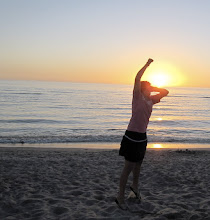
I met Margarida at the train station in Lisbon. She is the tallest Portuguese woman I have met, towering over most of the men at about 5’11. We took the train to her stop, then drove in her eco-friendly car to her flat in what seemed to be the middle of nowhere. She lives in an area of new development on the outskirts of greater Lisbon. I requested to stay with Margarida because I was interested in visiting Cascais (pronounced kus-kyshe), a sunny beach town on the Atlantic. After arriving and meeting her wild and talkative cat Simba, we had an interesting homemade dinner of what I will call “tuna cream noodles.” Margarida boiled about a cup of cream in a pan, then dumped in two cans of tuna in olive oil (the canned tuna in Spain and Portugal is very, very good). She stirred it up and poured the thick “sauce” over cooked pasta. Not what I would call authentic Portuguese, but easy, nonetheless.
We took an evening drive through Cascais. It felt nice to ride in a car for the first time in a while, especially with the Spanish disco music on the stereo. The light was gorgeous over the ocean, as we cruised down the road along the beach. The windy, cool evening was the perfect weather for a look at La Boca de Inferno (“Hell’s Mouth”). The large mouth-like opening in the rocks is the legendary location of a female suicide. When I first read about this attraction, those tourist traps along the rural highways through West Virginia came to mind, like The Bottomless Pit (Beware: it swallows men whole!) and The Devil’s Footprint (he was here and he left his mark!). Unlike those American ones, though, this natural formation did not require an admission fee. Like those American ones, the reality did not quite match the hype. Hell’s Mouth is a strong name for some small splashes at the base of a rocky ledge.
We also drove by one of the largest casinos in Europe (who would have thought it was right here in Cascais?) and through the small, very beachy town, giving me a lay of the land for the next day.
The flat is a mere 10 minute walk down a busy street lined with lemon trees from the bus stop. The day after we arrived, I caught the bus to Caracavelos, a very small beach town with a nice market. I spent just enough time to see the tiny mall and even more petit cinema, and buy some fruit before heading to Cascais for the day. I spent the day on the beach, doing beachy things in the beachy town. Actually, I could only manage one full hour on the sand in the morning because the sun felt like it was two inches from my back. I had a chance to wander through the town, the funky, water-themed mall, and the gigantic supermarket. I read, lunched, and napped in the park before Margarida picked me up and we went out to eat. A friend recommended to her a small restaurant actually in the middle of nowhere, which took us about 45 minutes to find. Thankfully we did because the codfish bread pudding we had was weirdly delicious. Plus, I had cake with pumpkin filling and ice cream as an early birthday treat for dessert. I asked for traditional Portuguese and I am so glad I got it.
Fun fact: Portuguese desserts are very sweet due to Moorish influence. The pastries are much sweeter (and more delicious) than in Spain.
Wednesday, July 9, 2008

Country Number 1
Country number 1 (of three) on my post-Espana EuroTour was Portugal. I don’t exactly know why I chose this small, yet culturally rich country as my first stop. My reasoning may have been that because I eventually want to see all of Europe, being so close to Portugal and not visiting it now would be inefficient (I’m studying economics). Efficiency aside, I know it was a great decision because, as I sit in the Milan airport on my way to country number 2, I already miss it.
For the month I have to travel, I am trying to stay in as few hostels as possible. In April, I joined an online community of travelers called Couchsurfing, which I will use as my main accommodation. The idea is that because I belong to the group, I can stay with other members of the group all over the world. Even though I am not set up to host in Boston, I am already looking forward to hosting Couchsurfers when I have my own place. It’s an ingenious concept with a very accessible website (I’m not advertising, really), but Couchsurfing only suits certain people. “Surfing” someone’s couch is a kind of homestay. In reality, I am staying with people in foreign countries whom I have never met. Thus far, these people have been Joana in Lisbon, Margarida in Cascais, and Judite in Porto. Each experience has been unique, but each host has been kind, generous, and overwhelmingly helpful.
I met Joana at her wonderful flat in an old part of Lisbon that reminded me of the houses in the Fan district of Richmond, Virginia. If you haven’t been there, the houses are mostly narrow and deep. Joana’s place is just like that, with high ceilings and white walls. I had luxurious accommodations having her guest bedroom all to myself. The first night, I learned more about the Portuguese economy, society, and culture than I ever expected to digest over one meal. I heard one of the very few critical voices of the Portuguese soccer craze. We discussed Portugal’s significance in the world and how America views it. We even touched on the relatively low minimum wage, and how prices match European countries with twice the median salaries. I wouldn’t have learned that much in a month if I stayed in hostels. It was just my first night surfing a couch, but I knew as I went to bed that this was definitely for me.
The next day, I had an amazing breakfast of fresh, warm, crusty bread with various cheeses and jams. Queso fresco is a fresh, firm, slightly salty white cheese delicious on the bread with some jam. I knew I was going to enjoy eating in Portugal when halfway through my breakfast, Joana’s boyfriend apologized for the bread being “too commercial.” Whatever that means. If this bread wasn’t considered great, then I couldn’t wait to try what was.
I wandered through Belem, a historic neighborhood 7 km from Lisbon center. The huge old cathedral was quite impressive, as were the creamy custard tartlets from the famous Pasteleria de Belem. I hopped the train to Chiado, the SoHo of Lisbon, a quick ten minutes away. Because it was Sunday, the streets were nearly empty, except for one packed with men, women, and children dressed in authentic-looking 19th century clothing. They were actors for a TV series, brave enough to sport woolen garb in the intense heat. It was somewhere in the high 30s Celcius, so after my lunch of octopus salad, I headed home for a siesta. These warm afternoons are the origins of the siesta, the break in the day when it is too hot to do anything but sleep.
On Sunday night, Joana and I went out for roasted sardines. June is supposedly the best time to eat sardines because they are the fattest during this month. We sat outside sipping white sangria and nibbling on bread and cheese when the pile of whole fish arrived, along with a salad with roasted peppers, and more bread. Joana told me the best way to eat them is on top of a slice of bread. After finishing 2 or 3, the bread has soaked up the oils and flavors of the fish becoming a savory treat in itself. We had five fish each- leaving us with very full bellies. I couldn’t skip dessert, though, so I tried a tiramisu-like layered cake. Biscuit cookies are soaked in coffee and layered with coffee mousse, then covered with caramel buttercream and sprinkled with pine nuts and brown sugar. It was rich and delicious, prompting an evening stroll before we headed home. Joana led me through the windy, narrow streets of the historic Alfama district of Lisbon. We stopped to see her favorite bar/restaurant, which doubles as a circus training school. The students work at the restaurant to help offset the tuition. The atmosphere felt more relaxed than silly, but I could have pictured a clown car packed with 12 people buzzing onto the dimly-lit patio.
The next day, I did more wandering through the city center. I told Joana I would bring home a dinner of Portuguese cheeses, good bread, and salad. She gave me the names of her favorite kinds, all of which were sheep’s milk varieties. She assured me El Corte Ingles, the largest department store chain in Spain with outlets in Portugal, would have them. The supermarket of the department store is on the lowest level and has the largest cheese selection I have ever seen in one place. Coming from Wisconsin, that is saying a lot. There must have been over 2000 cheeses from several countries, in addition to anything else you could hope for in a one-stop shop. My conversation in Spanglish with one of the helpful cheese mongers taught me a lot about which ones go together well. I brought back four of those she recommended, each with a distinct flavor and texture. Now, I realized after this lovely dinner that Portuguese cheeses are highly overlooked gourmet products. Small-scale production makes exporting many of these difficult, so Americans living 5000 miles away will have a hard time finding a Portuguese cheese plate on many menus. Also, many are highly perishable, and probably wouldn’t make it to North America retaining their high quality. This made me wonder what types of fancy French cheeses actually make the journey to the States. Only the mass-produced ones or varieties with serious lasting power will ever reach our plates. Nothing beats eating at the source.
For the month I have to travel, I am trying to stay in as few hostels as possible. In April, I joined an online community of travelers called Couchsurfing, which I will use as my main accommodation. The idea is that because I belong to the group, I can stay with other members of the group all over the world. Even though I am not set up to host in Boston, I am already looking forward to hosting Couchsurfers when I have my own place. It’s an ingenious concept with a very accessible website (I’m not advertising, really), but Couchsurfing only suits certain people. “Surfing” someone’s couch is a kind of homestay. In reality, I am staying with people in foreign countries whom I have never met. Thus far, these people have been Joana in Lisbon, Margarida in Cascais, and Judite in Porto. Each experience has been unique, but each host has been kind, generous, and overwhelmingly helpful.
I met Joana at her wonderful flat in an old part of Lisbon that reminded me of the houses in the Fan district of Richmond, Virginia. If you haven’t been there, the houses are mostly narrow and deep. Joana’s place is just like that, with high ceilings and white walls. I had luxurious accommodations having her guest bedroom all to myself. The first night, I learned more about the Portuguese economy, society, and culture than I ever expected to digest over one meal. I heard one of the very few critical voices of the Portuguese soccer craze. We discussed Portugal’s significance in the world and how America views it. We even touched on the relatively low minimum wage, and how prices match European countries with twice the median salaries. I wouldn’t have learned that much in a month if I stayed in hostels. It was just my first night surfing a couch, but I knew as I went to bed that this was definitely for me.
The next day, I had an amazing breakfast of fresh, warm, crusty bread with various cheeses and jams. Queso fresco is a fresh, firm, slightly salty white cheese delicious on the bread with some jam. I knew I was going to enjoy eating in Portugal when halfway through my breakfast, Joana’s boyfriend apologized for the bread being “too commercial.” Whatever that means. If this bread wasn’t considered great, then I couldn’t wait to try what was.
I wandered through Belem, a historic neighborhood 7 km from Lisbon center. The huge old cathedral was quite impressive, as were the creamy custard tartlets from the famous Pasteleria de Belem. I hopped the train to Chiado, the SoHo of Lisbon, a quick ten minutes away. Because it was Sunday, the streets were nearly empty, except for one packed with men, women, and children dressed in authentic-looking 19th century clothing. They were actors for a TV series, brave enough to sport woolen garb in the intense heat. It was somewhere in the high 30s Celcius, so after my lunch of octopus salad, I headed home for a siesta. These warm afternoons are the origins of the siesta, the break in the day when it is too hot to do anything but sleep.
On Sunday night, Joana and I went out for roasted sardines. June is supposedly the best time to eat sardines because they are the fattest during this month. We sat outside sipping white sangria and nibbling on bread and cheese when the pile of whole fish arrived, along with a salad with roasted peppers, and more bread. Joana told me the best way to eat them is on top of a slice of bread. After finishing 2 or 3, the bread has soaked up the oils and flavors of the fish becoming a savory treat in itself. We had five fish each- leaving us with very full bellies. I couldn’t skip dessert, though, so I tried a tiramisu-like layered cake. Biscuit cookies are soaked in coffee and layered with coffee mousse, then covered with caramel buttercream and sprinkled with pine nuts and brown sugar. It was rich and delicious, prompting an evening stroll before we headed home. Joana led me through the windy, narrow streets of the historic Alfama district of Lisbon. We stopped to see her favorite bar/restaurant, which doubles as a circus training school. The students work at the restaurant to help offset the tuition. The atmosphere felt more relaxed than silly, but I could have pictured a clown car packed with 12 people buzzing onto the dimly-lit patio.
The next day, I did more wandering through the city center. I told Joana I would bring home a dinner of Portuguese cheeses, good bread, and salad. She gave me the names of her favorite kinds, all of which were sheep’s milk varieties. She assured me El Corte Ingles, the largest department store chain in Spain with outlets in Portugal, would have them. The supermarket of the department store is on the lowest level and has the largest cheese selection I have ever seen in one place. Coming from Wisconsin, that is saying a lot. There must have been over 2000 cheeses from several countries, in addition to anything else you could hope for in a one-stop shop. My conversation in Spanglish with one of the helpful cheese mongers taught me a lot about which ones go together well. I brought back four of those she recommended, each with a distinct flavor and texture. Now, I realized after this lovely dinner that Portuguese cheeses are highly overlooked gourmet products. Small-scale production makes exporting many of these difficult, so Americans living 5000 miles away will have a hard time finding a Portuguese cheese plate on many menus. Also, many are highly perishable, and probably wouldn’t make it to North America retaining their high quality. This made me wonder what types of fancy French cheeses actually make the journey to the States. Only the mass-produced ones or varieties with serious lasting power will ever reach our plates. Nothing beats eating at the source.
Leaving Espana
The last night our group was together in Granada, we went to a funky, mod bar where the floor of our little room was covered with black sand (intentionally) and the light bulbs were blue. Tapas were vegetable crepes and tortellini, so I wouldn’t call this place authentic Spanish, but we had a good time. Of course, the next morning was the final exam, which didn’t stop some girls from staying out until 3AM. The program ended when I placed my test on Amalia’s desk and headed home to pack up.
I was sad to leave Carmen’s house, as I enjoyed living there and learning about Spain through her eyes. She was always interested in my ideas on the news, movies, American life, and men. We watched the news together often and had good conversations about the many hot topics in Spain. My vocabulary is limited, but I know enough words to formulate my general thoughts. More importantly, I understood what she was saying, so I could make the appropriate hand gestures to help me express myself when necessary. One time, though, when I was setting the table before lunch, I had to move a potted plant to put the tablecloth down. Of course the bottom was filled with water, which spilled all over the place when I picked it up. I didn’t know the word for “spill,” so what I ended up saying translates to “Carmen, the water is now on the floor.” She got the idea.
I was sad to leave Carmen’s house, as I enjoyed living there and learning about Spain through her eyes. She was always interested in my ideas on the news, movies, American life, and men. We watched the news together often and had good conversations about the many hot topics in Spain. My vocabulary is limited, but I know enough words to formulate my general thoughts. More importantly, I understood what she was saying, so I could make the appropriate hand gestures to help me express myself when necessary. One time, though, when I was setting the table before lunch, I had to move a potted plant to put the tablecloth down. Of course the bottom was filled with water, which spilled all over the place when I picked it up. I didn’t know the word for “spill,” so what I ended up saying translates to “Carmen, the water is now on the floor.” She got the idea.
Barcelona Again!
We didn’t have class on the third Friday of the program, so five other girls and I decided to rent an apartment in Barcelona for the weekend. I booked my tickets after the others and arrived later than they did on Thursday night. I met two of them at a cafeteria/ tapas bar near our short-term home in El Raval district. Both had rather scared faces when I arrived, which turned out to be because they had just sent a plates of ears back to the kitchen. Intending to order sheep’s milk cheese, or “queso do oveja,” they asked for the word that looked the most similar. “Oreja” directly translates to “ear,” and out came a plate of long, fried cartilage pieces. They still don’t know what animal they belonged to.
Staying in the apartment was great, even if it did mean sleeping on the couch pillows practically underneath the kitchen table. I passed the weekend seeing the sights I missed when here two weeks before. I rode the funicular (like a huge ski lift) from the side of a mountain down to the beach on Friday. Barcelona actually has two funiculars, one going up Montjuic and one going down. This one dropped me (not literally) right on one of the urban beaches, where I walked around before heading to La Boqueria for lunch. Bar Pintoxo (Pinocchio Bar) is a menu-less tapas bar that is always packed from opening at 6am to close at 4pm. I didn’t exactly know how it worked, but I got a seat between two enthusiastic Spaniards munching on langoustines and calamari with garbanzo beans. They both raved about the food as they happily chomped away, so I settled into my tiny seat prepared for a great meal. The five men behind the bar acted as servers, waiters, cooks, comedians, and overall entertainers. One told me the menu, giving recommendations throughout the short spiel. My grilled tuna steak with olive oil, calamari with flavorful tomato sauce, and langoustines (my neighbors’ looked so good!) sprinkled with chunky sea salt and drizzled with olive oil were amazing. I did feel a bit guilty about the langoustines because the pile of live critters was right in front of me on the bar. I watched one of the entertainers grab two fat ones and get pinched by another, before tossing them into the sauna. After I finished them, the pile of shells next to the pile of live ones was a slightly eerie juxtaposition. Two hours later, I waddled toward the apartment in dire need of a siesta.
Parc Guell- a hilly green space filled with Gaudi sculptures, architecture, and a few pieces of furniture he created for Casa Batllo- was just as interesting as every guidebook reported (pictures to come). I hiked up Montjuic, the lovely green mountain within Barcelona’s urban sprawl, on Sunday after reading a flyer for some sort of medieval festival that was to take place that afternoon. The huge celebration took place at the well-restored ancient castle on the mountain peak. I don’t know if it was an important birthday, or simply an annual fiesta, but I made it to the top to face a rather disturbing scene. The festival itself was great- lots of balloons, paper crowns, music, and costumes. The disturbing part was that, despite the bands playing funny instruments, lines of people dressed in old-timey military uniforms were shooting those long guns (bayonets?) at a rate of about fifty shots every five minutes. The sounds of those shots, on top of the canons they were also shooting, had lots of babies and children in tears. So while a jolly parade with larger-than-life puppets of past kings and queens marched through the castle and over the drawbridge, the accompanying mixture of medieval music, loud gun shots, crying babies, and canons echoed across the mountainside. My ears were ringing after twenty minutes, so I wandered back down, away from the madness.
That night, I met a family friend and her wonderful family for dinner. We walked to the restaurant from their hotel on the beach all the way into town and up Passeig de Gracia, the 5th Avenue of Barcelona. We ate at a very contemporary place with a simple menu. I believe the theme must have been “fresh” because it wasn’t Spanish, or Catalonian, or any recognizable origin. My “toro” tuna belly was delicate and delish, served only with sliced tomatoes sprinkled with black sesame seeds. The dessert I had was also wonderful- a take on the traditional Crema Catalana (Catalonian pudding dessert) with a whipped caramel pudding on top of a scoop of green apple sorbet. It was nice to speak English (and a bit of Spanish!) with such a kind family and the night was the perfect end to the relaxing weekend.
Staying in the apartment was great, even if it did mean sleeping on the couch pillows practically underneath the kitchen table. I passed the weekend seeing the sights I missed when here two weeks before. I rode the funicular (like a huge ski lift) from the side of a mountain down to the beach on Friday. Barcelona actually has two funiculars, one going up Montjuic and one going down. This one dropped me (not literally) right on one of the urban beaches, where I walked around before heading to La Boqueria for lunch. Bar Pintoxo (Pinocchio Bar) is a menu-less tapas bar that is always packed from opening at 6am to close at 4pm. I didn’t exactly know how it worked, but I got a seat between two enthusiastic Spaniards munching on langoustines and calamari with garbanzo beans. They both raved about the food as they happily chomped away, so I settled into my tiny seat prepared for a great meal. The five men behind the bar acted as servers, waiters, cooks, comedians, and overall entertainers. One told me the menu, giving recommendations throughout the short spiel. My grilled tuna steak with olive oil, calamari with flavorful tomato sauce, and langoustines (my neighbors’ looked so good!) sprinkled with chunky sea salt and drizzled with olive oil were amazing. I did feel a bit guilty about the langoustines because the pile of live critters was right in front of me on the bar. I watched one of the entertainers grab two fat ones and get pinched by another, before tossing them into the sauna. After I finished them, the pile of shells next to the pile of live ones was a slightly eerie juxtaposition. Two hours later, I waddled toward the apartment in dire need of a siesta.
Parc Guell- a hilly green space filled with Gaudi sculptures, architecture, and a few pieces of furniture he created for Casa Batllo- was just as interesting as every guidebook reported (pictures to come). I hiked up Montjuic, the lovely green mountain within Barcelona’s urban sprawl, on Sunday after reading a flyer for some sort of medieval festival that was to take place that afternoon. The huge celebration took place at the well-restored ancient castle on the mountain peak. I don’t know if it was an important birthday, or simply an annual fiesta, but I made it to the top to face a rather disturbing scene. The festival itself was great- lots of balloons, paper crowns, music, and costumes. The disturbing part was that, despite the bands playing funny instruments, lines of people dressed in old-timey military uniforms were shooting those long guns (bayonets?) at a rate of about fifty shots every five minutes. The sounds of those shots, on top of the canons they were also shooting, had lots of babies and children in tears. So while a jolly parade with larger-than-life puppets of past kings and queens marched through the castle and over the drawbridge, the accompanying mixture of medieval music, loud gun shots, crying babies, and canons echoed across the mountainside. My ears were ringing after twenty minutes, so I wandered back down, away from the madness.
That night, I met a family friend and her wonderful family for dinner. We walked to the restaurant from their hotel on the beach all the way into town and up Passeig de Gracia, the 5th Avenue of Barcelona. We ate at a very contemporary place with a simple menu. I believe the theme must have been “fresh” because it wasn’t Spanish, or Catalonian, or any recognizable origin. My “toro” tuna belly was delicate and delish, served only with sliced tomatoes sprinkled with black sesame seeds. The dessert I had was also wonderful- a take on the traditional Crema Catalana (Catalonian pudding dessert) with a whipped caramel pudding on top of a scoop of green apple sorbet. It was nice to speak English (and a bit of Spanish!) with such a kind family and the night was the perfect end to the relaxing weekend.
Thursday, June 26, 2008
Grrrrranada
After about two weeks, my days in Granada became pleasantly routine. Up at 9, class at 9:30, out at half past 12. I used the time between the end of class and lunch at 3:30 to wander, sometimes stumbling upon a funky clothing store or, more interestingly, a fruteria with unidentifiable produce. Sometimes I would sit in the Puerta Real, one of the main plazas, and attempt to translate the slang which uniquely-dressed teenagers use in everyday conversation. After a leisurely lunch, my siesta would last until around 6, when I would either meet the group for an activity or go out for helado. Before doing either of these, I liked to employ the use of the fascinating coffee maker for a small, intense cup of (decaf) joe. Carmen’s son had to show me how to use it because before I realized its use, I had no clue as to what kind of kitchen appliance it actually is. The coffee and the water go in the bottom half, and as it brews, the liquid defies gravity flowing up the skinny spout. The dark coffee then spills out of the holes of the spout and into the top part of the machine. What’s left is an intense drink, screaming for sugar and milk. Great after a siesta!
My favorite group activities of the second half of the program were seeing a Spanish movie, going to an Arab teteria, playing soccer under the million-degree sun on a concrete field, seeing a Flamenco show in a very neat area of the city, and having a “mid-term party” in Amalia (the program director)’s penthouse. The movie we saw was a comedy called “Fuera de Carta,” or “Outside the menu.” The title has multiple meanings, as the plot followed the complicated life of a gay chef. I understood about half of the words, but all of the emotion. Slapstick humor defies language barriers!
The Arab teteria where I had the most watery chocolate “milkshake” ever, was located in El Albaicin, the last remaining Arab neighborhood in Granada. There are a few, dimly-lit, Arabian-themed teterias in this area. Most have similar menus of about fifty different types of tea, juices, overpriced food, and these “milkshakes,” that I continue to put in quotes because they are only milkshakes in name. I ordered the fab-sounding chocolate banana shake. But, what came was a glass of milk with a little Ovaltine-type powder, and hints of banana pulp. Other girls who fell for the same trick, expecting a cool-me-down ice cream drink, were also disappointed. Next time I’ll get tea.
The sun was so bright when we played soccer last week that I sweated my sunglasses off my nose. That was a little gross. Sorry.
The Dean of the College of Arts and Sciences at Simmons, Diane Raymond, came for a short visit to see the program and meet the faculty. The second night she was here, we went to see a Flamenco show and have tapas afterward. The theater was in Sacromonte, the old gypsy neighborhood. Sacromonte is located on the side of a mountain filled with caves. Many years ago, the government pushed the gypsies to this area and they built houses around the caves. It has since been gentrified due to the wonderful location and view of the Alhambra. Chic restaurants, hotels, Flamenco theaters, and some residences now take up most of the mountainside. The gypsies have again been relocated.
The Flamenco was fun and lively, with much less group dancing than I thought. The climax of the performance is when the two best female dancers, the singer, and the Spanish guitar player stand in the middle of the stage in a half circle, improvising. One girl dances for a while, as the others cheer her on. Then, the next one dances completely different. Finally, the singer takes center stage and belts out his song. Every night, this part of the show is new, as it’s mostly improvisation. We went on a good night J.
To celebrate Dean Raymond’s presence, we had the traditionally end-of-program party in the middle. Amalia lives in an amazing penthouse apartment with a lovely balcony where we could look out over the city. She and her husband prepared a wonderful meal, beginning with olives, Manchego, and San Moreno soup, which is like gazpacho, but blended with bread to make it very thick and rich. Spanish tortilla, tuna empanada, salad, roasted peppers, bread, and Moroccan-spiced chicken made up the meal. Dessert was a soft almond cake and flan.
As I’m mentioning sweets, I believe now is a fine time to comment on Spanish desserts. To be honest, I just don’t think they are that good. Sure, I love the helado, but the pastries? Not so much. The cookies seem a little dry, the cakes could use more flavor, and oftentimes I think flan needs more oomph, like a kick of liquor or heavy syrup. The exceptions to this generalization make me change my mind, but they are so rare. I’ll stick to the cheese platter for dessert here.
My favorite group activities of the second half of the program were seeing a Spanish movie, going to an Arab teteria, playing soccer under the million-degree sun on a concrete field, seeing a Flamenco show in a very neat area of the city, and having a “mid-term party” in Amalia (the program director)’s penthouse. The movie we saw was a comedy called “Fuera de Carta,” or “Outside the menu.” The title has multiple meanings, as the plot followed the complicated life of a gay chef. I understood about half of the words, but all of the emotion. Slapstick humor defies language barriers!
The Arab teteria where I had the most watery chocolate “milkshake” ever, was located in El Albaicin, the last remaining Arab neighborhood in Granada. There are a few, dimly-lit, Arabian-themed teterias in this area. Most have similar menus of about fifty different types of tea, juices, overpriced food, and these “milkshakes,” that I continue to put in quotes because they are only milkshakes in name. I ordered the fab-sounding chocolate banana shake. But, what came was a glass of milk with a little Ovaltine-type powder, and hints of banana pulp. Other girls who fell for the same trick, expecting a cool-me-down ice cream drink, were also disappointed. Next time I’ll get tea.
The sun was so bright when we played soccer last week that I sweated my sunglasses off my nose. That was a little gross. Sorry.
The Dean of the College of Arts and Sciences at Simmons, Diane Raymond, came for a short visit to see the program and meet the faculty. The second night she was here, we went to see a Flamenco show and have tapas afterward. The theater was in Sacromonte, the old gypsy neighborhood. Sacromonte is located on the side of a mountain filled with caves. Many years ago, the government pushed the gypsies to this area and they built houses around the caves. It has since been gentrified due to the wonderful location and view of the Alhambra. Chic restaurants, hotels, Flamenco theaters, and some residences now take up most of the mountainside. The gypsies have again been relocated.
The Flamenco was fun and lively, with much less group dancing than I thought. The climax of the performance is when the two best female dancers, the singer, and the Spanish guitar player stand in the middle of the stage in a half circle, improvising. One girl dances for a while, as the others cheer her on. Then, the next one dances completely different. Finally, the singer takes center stage and belts out his song. Every night, this part of the show is new, as it’s mostly improvisation. We went on a good night J.
To celebrate Dean Raymond’s presence, we had the traditionally end-of-program party in the middle. Amalia lives in an amazing penthouse apartment with a lovely balcony where we could look out over the city. She and her husband prepared a wonderful meal, beginning with olives, Manchego, and San Moreno soup, which is like gazpacho, but blended with bread to make it very thick and rich. Spanish tortilla, tuna empanada, salad, roasted peppers, bread, and Moroccan-spiced chicken made up the meal. Dessert was a soft almond cake and flan.
As I’m mentioning sweets, I believe now is a fine time to comment on Spanish desserts. To be honest, I just don’t think they are that good. Sure, I love the helado, but the pastries? Not so much. The cookies seem a little dry, the cakes could use more flavor, and oftentimes I think flan needs more oomph, like a kick of liquor or heavy syrup. The exceptions to this generalization make me change my mind, but they are so rare. I’ll stick to the cheese platter for dessert here.
Thursday, June 12, 2008


Out and About in Granada
 Dinner on the first night: boiled shrimp, fried shrimp with tomatoes, Spanish tortilla (potato omelette), ham platter, fried potatoes with peppers and poached eggs on top, salad with cheese and dried fruit, and fried croquettes
 The back of the Cathedral in Granada
 One view of the Alhambra
 Inside the Alhambra
 Inside the Alhambra looking out over Granada
Subscribe to:
Posts (Atom)