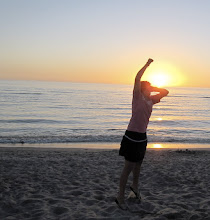
I met Margarida at the train station in Lisbon. She is the tallest Portuguese woman I have met, towering over most of the men at about 5’11. We took the train to her stop, then drove in her eco-friendly car to her flat in what seemed to be the middle of nowhere. She lives in an area of new development on the outskirts of greater Lisbon. I requested to stay with Margarida because I was interested in visiting Cascais (pronounced kus-kyshe), a sunny beach town on the Atlantic. After arriving and meeting her wild and talkative cat Simba, we had an interesting homemade dinner of what I will call “tuna cream noodles.” Margarida boiled about a cup of cream in a pan, then dumped in two cans of tuna in olive oil (the canned tuna in Spain and Portugal is very, very good). She stirred it up and poured the thick “sauce” over cooked pasta. Not what I would call authentic Portuguese, but easy, nonetheless.
We took an evening drive through Cascais. It felt nice to ride in a car for the first time in a while, especially with the Spanish disco music on the stereo. The light was gorgeous over the ocean, as we cruised down the road along the beach. The windy, cool evening was the perfect weather for a look at La Boca de Inferno (“Hell’s Mouth”). The large mouth-like opening in the rocks is the legendary location of a female suicide. When I first read about this attraction, those tourist traps along the rural highways through West Virginia came to mind, like The Bottomless Pit (Beware: it swallows men whole!) and The Devil’s Footprint (he was here and he left his mark!). Unlike those American ones, though, this natural formation did not require an admission fee. Like those American ones, the reality did not quite match the hype. Hell’s Mouth is a strong name for some small splashes at the base of a rocky ledge.
We also drove by one of the largest casinos in Europe (who would have thought it was right here in Cascais?) and through the small, very beachy town, giving me a lay of the land for the next day.
The flat is a mere 10 minute walk down a busy street lined with lemon trees from the bus stop. The day after we arrived, I caught the bus to Caracavelos, a very small beach town with a nice market. I spent just enough time to see the tiny mall and even more petit cinema, and buy some fruit before heading to Cascais for the day. I spent the day on the beach, doing beachy things in the beachy town. Actually, I could only manage one full hour on the sand in the morning because the sun felt like it was two inches from my back. I had a chance to wander through the town, the funky, water-themed mall, and the gigantic supermarket. I read, lunched, and napped in the park before Margarida picked me up and we went out to eat. A friend recommended to her a small restaurant actually in the middle of nowhere, which took us about 45 minutes to find. Thankfully we did because the codfish bread pudding we had was weirdly delicious. Plus, I had cake with pumpkin filling and ice cream as an early birthday treat for dessert. I asked for traditional Portuguese and I am so glad I got it.
Fun fact: Portuguese desserts are very sweet due to Moorish influence. The pastries are much sweeter (and more delicious) than in Spain.
Wednesday, July 9, 2008

Country Number 1
Country number 1 (of three) on my post-Espana EuroTour was Portugal. I don’t exactly know why I chose this small, yet culturally rich country as my first stop. My reasoning may have been that because I eventually want to see all of Europe, being so close to Portugal and not visiting it now would be inefficient (I’m studying economics). Efficiency aside, I know it was a great decision because, as I sit in the Milan airport on my way to country number 2, I already miss it.
For the month I have to travel, I am trying to stay in as few hostels as possible. In April, I joined an online community of travelers called Couchsurfing, which I will use as my main accommodation. The idea is that because I belong to the group, I can stay with other members of the group all over the world. Even though I am not set up to host in Boston, I am already looking forward to hosting Couchsurfers when I have my own place. It’s an ingenious concept with a very accessible website (I’m not advertising, really), but Couchsurfing only suits certain people. “Surfing” someone’s couch is a kind of homestay. In reality, I am staying with people in foreign countries whom I have never met. Thus far, these people have been Joana in Lisbon, Margarida in Cascais, and Judite in Porto. Each experience has been unique, but each host has been kind, generous, and overwhelmingly helpful.
I met Joana at her wonderful flat in an old part of Lisbon that reminded me of the houses in the Fan district of Richmond, Virginia. If you haven’t been there, the houses are mostly narrow and deep. Joana’s place is just like that, with high ceilings and white walls. I had luxurious accommodations having her guest bedroom all to myself. The first night, I learned more about the Portuguese economy, society, and culture than I ever expected to digest over one meal. I heard one of the very few critical voices of the Portuguese soccer craze. We discussed Portugal’s significance in the world and how America views it. We even touched on the relatively low minimum wage, and how prices match European countries with twice the median salaries. I wouldn’t have learned that much in a month if I stayed in hostels. It was just my first night surfing a couch, but I knew as I went to bed that this was definitely for me.
The next day, I had an amazing breakfast of fresh, warm, crusty bread with various cheeses and jams. Queso fresco is a fresh, firm, slightly salty white cheese delicious on the bread with some jam. I knew I was going to enjoy eating in Portugal when halfway through my breakfast, Joana’s boyfriend apologized for the bread being “too commercial.” Whatever that means. If this bread wasn’t considered great, then I couldn’t wait to try what was.
I wandered through Belem, a historic neighborhood 7 km from Lisbon center. The huge old cathedral was quite impressive, as were the creamy custard tartlets from the famous Pasteleria de Belem. I hopped the train to Chiado, the SoHo of Lisbon, a quick ten minutes away. Because it was Sunday, the streets were nearly empty, except for one packed with men, women, and children dressed in authentic-looking 19th century clothing. They were actors for a TV series, brave enough to sport woolen garb in the intense heat. It was somewhere in the high 30s Celcius, so after my lunch of octopus salad, I headed home for a siesta. These warm afternoons are the origins of the siesta, the break in the day when it is too hot to do anything but sleep.
On Sunday night, Joana and I went out for roasted sardines. June is supposedly the best time to eat sardines because they are the fattest during this month. We sat outside sipping white sangria and nibbling on bread and cheese when the pile of whole fish arrived, along with a salad with roasted peppers, and more bread. Joana told me the best way to eat them is on top of a slice of bread. After finishing 2 or 3, the bread has soaked up the oils and flavors of the fish becoming a savory treat in itself. We had five fish each- leaving us with very full bellies. I couldn’t skip dessert, though, so I tried a tiramisu-like layered cake. Biscuit cookies are soaked in coffee and layered with coffee mousse, then covered with caramel buttercream and sprinkled with pine nuts and brown sugar. It was rich and delicious, prompting an evening stroll before we headed home. Joana led me through the windy, narrow streets of the historic Alfama district of Lisbon. We stopped to see her favorite bar/restaurant, which doubles as a circus training school. The students work at the restaurant to help offset the tuition. The atmosphere felt more relaxed than silly, but I could have pictured a clown car packed with 12 people buzzing onto the dimly-lit patio.
The next day, I did more wandering through the city center. I told Joana I would bring home a dinner of Portuguese cheeses, good bread, and salad. She gave me the names of her favorite kinds, all of which were sheep’s milk varieties. She assured me El Corte Ingles, the largest department store chain in Spain with outlets in Portugal, would have them. The supermarket of the department store is on the lowest level and has the largest cheese selection I have ever seen in one place. Coming from Wisconsin, that is saying a lot. There must have been over 2000 cheeses from several countries, in addition to anything else you could hope for in a one-stop shop. My conversation in Spanglish with one of the helpful cheese mongers taught me a lot about which ones go together well. I brought back four of those she recommended, each with a distinct flavor and texture. Now, I realized after this lovely dinner that Portuguese cheeses are highly overlooked gourmet products. Small-scale production makes exporting many of these difficult, so Americans living 5000 miles away will have a hard time finding a Portuguese cheese plate on many menus. Also, many are highly perishable, and probably wouldn’t make it to North America retaining their high quality. This made me wonder what types of fancy French cheeses actually make the journey to the States. Only the mass-produced ones or varieties with serious lasting power will ever reach our plates. Nothing beats eating at the source.
For the month I have to travel, I am trying to stay in as few hostels as possible. In April, I joined an online community of travelers called Couchsurfing, which I will use as my main accommodation. The idea is that because I belong to the group, I can stay with other members of the group all over the world. Even though I am not set up to host in Boston, I am already looking forward to hosting Couchsurfers when I have my own place. It’s an ingenious concept with a very accessible website (I’m not advertising, really), but Couchsurfing only suits certain people. “Surfing” someone’s couch is a kind of homestay. In reality, I am staying with people in foreign countries whom I have never met. Thus far, these people have been Joana in Lisbon, Margarida in Cascais, and Judite in Porto. Each experience has been unique, but each host has been kind, generous, and overwhelmingly helpful.
I met Joana at her wonderful flat in an old part of Lisbon that reminded me of the houses in the Fan district of Richmond, Virginia. If you haven’t been there, the houses are mostly narrow and deep. Joana’s place is just like that, with high ceilings and white walls. I had luxurious accommodations having her guest bedroom all to myself. The first night, I learned more about the Portuguese economy, society, and culture than I ever expected to digest over one meal. I heard one of the very few critical voices of the Portuguese soccer craze. We discussed Portugal’s significance in the world and how America views it. We even touched on the relatively low minimum wage, and how prices match European countries with twice the median salaries. I wouldn’t have learned that much in a month if I stayed in hostels. It was just my first night surfing a couch, but I knew as I went to bed that this was definitely for me.
The next day, I had an amazing breakfast of fresh, warm, crusty bread with various cheeses and jams. Queso fresco is a fresh, firm, slightly salty white cheese delicious on the bread with some jam. I knew I was going to enjoy eating in Portugal when halfway through my breakfast, Joana’s boyfriend apologized for the bread being “too commercial.” Whatever that means. If this bread wasn’t considered great, then I couldn’t wait to try what was.
I wandered through Belem, a historic neighborhood 7 km from Lisbon center. The huge old cathedral was quite impressive, as were the creamy custard tartlets from the famous Pasteleria de Belem. I hopped the train to Chiado, the SoHo of Lisbon, a quick ten minutes away. Because it was Sunday, the streets were nearly empty, except for one packed with men, women, and children dressed in authentic-looking 19th century clothing. They were actors for a TV series, brave enough to sport woolen garb in the intense heat. It was somewhere in the high 30s Celcius, so after my lunch of octopus salad, I headed home for a siesta. These warm afternoons are the origins of the siesta, the break in the day when it is too hot to do anything but sleep.
On Sunday night, Joana and I went out for roasted sardines. June is supposedly the best time to eat sardines because they are the fattest during this month. We sat outside sipping white sangria and nibbling on bread and cheese when the pile of whole fish arrived, along with a salad with roasted peppers, and more bread. Joana told me the best way to eat them is on top of a slice of bread. After finishing 2 or 3, the bread has soaked up the oils and flavors of the fish becoming a savory treat in itself. We had five fish each- leaving us with very full bellies. I couldn’t skip dessert, though, so I tried a tiramisu-like layered cake. Biscuit cookies are soaked in coffee and layered with coffee mousse, then covered with caramel buttercream and sprinkled with pine nuts and brown sugar. It was rich and delicious, prompting an evening stroll before we headed home. Joana led me through the windy, narrow streets of the historic Alfama district of Lisbon. We stopped to see her favorite bar/restaurant, which doubles as a circus training school. The students work at the restaurant to help offset the tuition. The atmosphere felt more relaxed than silly, but I could have pictured a clown car packed with 12 people buzzing onto the dimly-lit patio.
The next day, I did more wandering through the city center. I told Joana I would bring home a dinner of Portuguese cheeses, good bread, and salad. She gave me the names of her favorite kinds, all of which were sheep’s milk varieties. She assured me El Corte Ingles, the largest department store chain in Spain with outlets in Portugal, would have them. The supermarket of the department store is on the lowest level and has the largest cheese selection I have ever seen in one place. Coming from Wisconsin, that is saying a lot. There must have been over 2000 cheeses from several countries, in addition to anything else you could hope for in a one-stop shop. My conversation in Spanglish with one of the helpful cheese mongers taught me a lot about which ones go together well. I brought back four of those she recommended, each with a distinct flavor and texture. Now, I realized after this lovely dinner that Portuguese cheeses are highly overlooked gourmet products. Small-scale production makes exporting many of these difficult, so Americans living 5000 miles away will have a hard time finding a Portuguese cheese plate on many menus. Also, many are highly perishable, and probably wouldn’t make it to North America retaining their high quality. This made me wonder what types of fancy French cheeses actually make the journey to the States. Only the mass-produced ones or varieties with serious lasting power will ever reach our plates. Nothing beats eating at the source.
Leaving Espana
The last night our group was together in Granada, we went to a funky, mod bar where the floor of our little room was covered with black sand (intentionally) and the light bulbs were blue. Tapas were vegetable crepes and tortellini, so I wouldn’t call this place authentic Spanish, but we had a good time. Of course, the next morning was the final exam, which didn’t stop some girls from staying out until 3AM. The program ended when I placed my test on Amalia’s desk and headed home to pack up.
I was sad to leave Carmen’s house, as I enjoyed living there and learning about Spain through her eyes. She was always interested in my ideas on the news, movies, American life, and men. We watched the news together often and had good conversations about the many hot topics in Spain. My vocabulary is limited, but I know enough words to formulate my general thoughts. More importantly, I understood what she was saying, so I could make the appropriate hand gestures to help me express myself when necessary. One time, though, when I was setting the table before lunch, I had to move a potted plant to put the tablecloth down. Of course the bottom was filled with water, which spilled all over the place when I picked it up. I didn’t know the word for “spill,” so what I ended up saying translates to “Carmen, the water is now on the floor.” She got the idea.
I was sad to leave Carmen’s house, as I enjoyed living there and learning about Spain through her eyes. She was always interested in my ideas on the news, movies, American life, and men. We watched the news together often and had good conversations about the many hot topics in Spain. My vocabulary is limited, but I know enough words to formulate my general thoughts. More importantly, I understood what she was saying, so I could make the appropriate hand gestures to help me express myself when necessary. One time, though, when I was setting the table before lunch, I had to move a potted plant to put the tablecloth down. Of course the bottom was filled with water, which spilled all over the place when I picked it up. I didn’t know the word for “spill,” so what I ended up saying translates to “Carmen, the water is now on the floor.” She got the idea.
Barcelona Again!
We didn’t have class on the third Friday of the program, so five other girls and I decided to rent an apartment in Barcelona for the weekend. I booked my tickets after the others and arrived later than they did on Thursday night. I met two of them at a cafeteria/ tapas bar near our short-term home in El Raval district. Both had rather scared faces when I arrived, which turned out to be because they had just sent a plates of ears back to the kitchen. Intending to order sheep’s milk cheese, or “queso do oveja,” they asked for the word that looked the most similar. “Oreja” directly translates to “ear,” and out came a plate of long, fried cartilage pieces. They still don’t know what animal they belonged to.
Staying in the apartment was great, even if it did mean sleeping on the couch pillows practically underneath the kitchen table. I passed the weekend seeing the sights I missed when here two weeks before. I rode the funicular (like a huge ski lift) from the side of a mountain down to the beach on Friday. Barcelona actually has two funiculars, one going up Montjuic and one going down. This one dropped me (not literally) right on one of the urban beaches, where I walked around before heading to La Boqueria for lunch. Bar Pintoxo (Pinocchio Bar) is a menu-less tapas bar that is always packed from opening at 6am to close at 4pm. I didn’t exactly know how it worked, but I got a seat between two enthusiastic Spaniards munching on langoustines and calamari with garbanzo beans. They both raved about the food as they happily chomped away, so I settled into my tiny seat prepared for a great meal. The five men behind the bar acted as servers, waiters, cooks, comedians, and overall entertainers. One told me the menu, giving recommendations throughout the short spiel. My grilled tuna steak with olive oil, calamari with flavorful tomato sauce, and langoustines (my neighbors’ looked so good!) sprinkled with chunky sea salt and drizzled with olive oil were amazing. I did feel a bit guilty about the langoustines because the pile of live critters was right in front of me on the bar. I watched one of the entertainers grab two fat ones and get pinched by another, before tossing them into the sauna. After I finished them, the pile of shells next to the pile of live ones was a slightly eerie juxtaposition. Two hours later, I waddled toward the apartment in dire need of a siesta.
Parc Guell- a hilly green space filled with Gaudi sculptures, architecture, and a few pieces of furniture he created for Casa Batllo- was just as interesting as every guidebook reported (pictures to come). I hiked up Montjuic, the lovely green mountain within Barcelona’s urban sprawl, on Sunday after reading a flyer for some sort of medieval festival that was to take place that afternoon. The huge celebration took place at the well-restored ancient castle on the mountain peak. I don’t know if it was an important birthday, or simply an annual fiesta, but I made it to the top to face a rather disturbing scene. The festival itself was great- lots of balloons, paper crowns, music, and costumes. The disturbing part was that, despite the bands playing funny instruments, lines of people dressed in old-timey military uniforms were shooting those long guns (bayonets?) at a rate of about fifty shots every five minutes. The sounds of those shots, on top of the canons they were also shooting, had lots of babies and children in tears. So while a jolly parade with larger-than-life puppets of past kings and queens marched through the castle and over the drawbridge, the accompanying mixture of medieval music, loud gun shots, crying babies, and canons echoed across the mountainside. My ears were ringing after twenty minutes, so I wandered back down, away from the madness.
That night, I met a family friend and her wonderful family for dinner. We walked to the restaurant from their hotel on the beach all the way into town and up Passeig de Gracia, the 5th Avenue of Barcelona. We ate at a very contemporary place with a simple menu. I believe the theme must have been “fresh” because it wasn’t Spanish, or Catalonian, or any recognizable origin. My “toro” tuna belly was delicate and delish, served only with sliced tomatoes sprinkled with black sesame seeds. The dessert I had was also wonderful- a take on the traditional Crema Catalana (Catalonian pudding dessert) with a whipped caramel pudding on top of a scoop of green apple sorbet. It was nice to speak English (and a bit of Spanish!) with such a kind family and the night was the perfect end to the relaxing weekend.
Staying in the apartment was great, even if it did mean sleeping on the couch pillows practically underneath the kitchen table. I passed the weekend seeing the sights I missed when here two weeks before. I rode the funicular (like a huge ski lift) from the side of a mountain down to the beach on Friday. Barcelona actually has two funiculars, one going up Montjuic and one going down. This one dropped me (not literally) right on one of the urban beaches, where I walked around before heading to La Boqueria for lunch. Bar Pintoxo (Pinocchio Bar) is a menu-less tapas bar that is always packed from opening at 6am to close at 4pm. I didn’t exactly know how it worked, but I got a seat between two enthusiastic Spaniards munching on langoustines and calamari with garbanzo beans. They both raved about the food as they happily chomped away, so I settled into my tiny seat prepared for a great meal. The five men behind the bar acted as servers, waiters, cooks, comedians, and overall entertainers. One told me the menu, giving recommendations throughout the short spiel. My grilled tuna steak with olive oil, calamari with flavorful tomato sauce, and langoustines (my neighbors’ looked so good!) sprinkled with chunky sea salt and drizzled with olive oil were amazing. I did feel a bit guilty about the langoustines because the pile of live critters was right in front of me on the bar. I watched one of the entertainers grab two fat ones and get pinched by another, before tossing them into the sauna. After I finished them, the pile of shells next to the pile of live ones was a slightly eerie juxtaposition. Two hours later, I waddled toward the apartment in dire need of a siesta.
Parc Guell- a hilly green space filled with Gaudi sculptures, architecture, and a few pieces of furniture he created for Casa Batllo- was just as interesting as every guidebook reported (pictures to come). I hiked up Montjuic, the lovely green mountain within Barcelona’s urban sprawl, on Sunday after reading a flyer for some sort of medieval festival that was to take place that afternoon. The huge celebration took place at the well-restored ancient castle on the mountain peak. I don’t know if it was an important birthday, or simply an annual fiesta, but I made it to the top to face a rather disturbing scene. The festival itself was great- lots of balloons, paper crowns, music, and costumes. The disturbing part was that, despite the bands playing funny instruments, lines of people dressed in old-timey military uniforms were shooting those long guns (bayonets?) at a rate of about fifty shots every five minutes. The sounds of those shots, on top of the canons they were also shooting, had lots of babies and children in tears. So while a jolly parade with larger-than-life puppets of past kings and queens marched through the castle and over the drawbridge, the accompanying mixture of medieval music, loud gun shots, crying babies, and canons echoed across the mountainside. My ears were ringing after twenty minutes, so I wandered back down, away from the madness.
That night, I met a family friend and her wonderful family for dinner. We walked to the restaurant from their hotel on the beach all the way into town and up Passeig de Gracia, the 5th Avenue of Barcelona. We ate at a very contemporary place with a simple menu. I believe the theme must have been “fresh” because it wasn’t Spanish, or Catalonian, or any recognizable origin. My “toro” tuna belly was delicate and delish, served only with sliced tomatoes sprinkled with black sesame seeds. The dessert I had was also wonderful- a take on the traditional Crema Catalana (Catalonian pudding dessert) with a whipped caramel pudding on top of a scoop of green apple sorbet. It was nice to speak English (and a bit of Spanish!) with such a kind family and the night was the perfect end to the relaxing weekend.
Thursday, June 26, 2008
Grrrrranada
After about two weeks, my days in Granada became pleasantly routine. Up at 9, class at 9:30, out at half past 12. I used the time between the end of class and lunch at 3:30 to wander, sometimes stumbling upon a funky clothing store or, more interestingly, a fruteria with unidentifiable produce. Sometimes I would sit in the Puerta Real, one of the main plazas, and attempt to translate the slang which uniquely-dressed teenagers use in everyday conversation. After a leisurely lunch, my siesta would last until around 6, when I would either meet the group for an activity or go out for helado. Before doing either of these, I liked to employ the use of the fascinating coffee maker for a small, intense cup of (decaf) joe. Carmen’s son had to show me how to use it because before I realized its use, I had no clue as to what kind of kitchen appliance it actually is. The coffee and the water go in the bottom half, and as it brews, the liquid defies gravity flowing up the skinny spout. The dark coffee then spills out of the holes of the spout and into the top part of the machine. What’s left is an intense drink, screaming for sugar and milk. Great after a siesta!
My favorite group activities of the second half of the program were seeing a Spanish movie, going to an Arab teteria, playing soccer under the million-degree sun on a concrete field, seeing a Flamenco show in a very neat area of the city, and having a “mid-term party” in Amalia (the program director)’s penthouse. The movie we saw was a comedy called “Fuera de Carta,” or “Outside the menu.” The title has multiple meanings, as the plot followed the complicated life of a gay chef. I understood about half of the words, but all of the emotion. Slapstick humor defies language barriers!
The Arab teteria where I had the most watery chocolate “milkshake” ever, was located in El Albaicin, the last remaining Arab neighborhood in Granada. There are a few, dimly-lit, Arabian-themed teterias in this area. Most have similar menus of about fifty different types of tea, juices, overpriced food, and these “milkshakes,” that I continue to put in quotes because they are only milkshakes in name. I ordered the fab-sounding chocolate banana shake. But, what came was a glass of milk with a little Ovaltine-type powder, and hints of banana pulp. Other girls who fell for the same trick, expecting a cool-me-down ice cream drink, were also disappointed. Next time I’ll get tea.
The sun was so bright when we played soccer last week that I sweated my sunglasses off my nose. That was a little gross. Sorry.
The Dean of the College of Arts and Sciences at Simmons, Diane Raymond, came for a short visit to see the program and meet the faculty. The second night she was here, we went to see a Flamenco show and have tapas afterward. The theater was in Sacromonte, the old gypsy neighborhood. Sacromonte is located on the side of a mountain filled with caves. Many years ago, the government pushed the gypsies to this area and they built houses around the caves. It has since been gentrified due to the wonderful location and view of the Alhambra. Chic restaurants, hotels, Flamenco theaters, and some residences now take up most of the mountainside. The gypsies have again been relocated.
The Flamenco was fun and lively, with much less group dancing than I thought. The climax of the performance is when the two best female dancers, the singer, and the Spanish guitar player stand in the middle of the stage in a half circle, improvising. One girl dances for a while, as the others cheer her on. Then, the next one dances completely different. Finally, the singer takes center stage and belts out his song. Every night, this part of the show is new, as it’s mostly improvisation. We went on a good night J.
To celebrate Dean Raymond’s presence, we had the traditionally end-of-program party in the middle. Amalia lives in an amazing penthouse apartment with a lovely balcony where we could look out over the city. She and her husband prepared a wonderful meal, beginning with olives, Manchego, and San Moreno soup, which is like gazpacho, but blended with bread to make it very thick and rich. Spanish tortilla, tuna empanada, salad, roasted peppers, bread, and Moroccan-spiced chicken made up the meal. Dessert was a soft almond cake and flan.
As I’m mentioning sweets, I believe now is a fine time to comment on Spanish desserts. To be honest, I just don’t think they are that good. Sure, I love the helado, but the pastries? Not so much. The cookies seem a little dry, the cakes could use more flavor, and oftentimes I think flan needs more oomph, like a kick of liquor or heavy syrup. The exceptions to this generalization make me change my mind, but they are so rare. I’ll stick to the cheese platter for dessert here.
My favorite group activities of the second half of the program were seeing a Spanish movie, going to an Arab teteria, playing soccer under the million-degree sun on a concrete field, seeing a Flamenco show in a very neat area of the city, and having a “mid-term party” in Amalia (the program director)’s penthouse. The movie we saw was a comedy called “Fuera de Carta,” or “Outside the menu.” The title has multiple meanings, as the plot followed the complicated life of a gay chef. I understood about half of the words, but all of the emotion. Slapstick humor defies language barriers!
The Arab teteria where I had the most watery chocolate “milkshake” ever, was located in El Albaicin, the last remaining Arab neighborhood in Granada. There are a few, dimly-lit, Arabian-themed teterias in this area. Most have similar menus of about fifty different types of tea, juices, overpriced food, and these “milkshakes,” that I continue to put in quotes because they are only milkshakes in name. I ordered the fab-sounding chocolate banana shake. But, what came was a glass of milk with a little Ovaltine-type powder, and hints of banana pulp. Other girls who fell for the same trick, expecting a cool-me-down ice cream drink, were also disappointed. Next time I’ll get tea.
The sun was so bright when we played soccer last week that I sweated my sunglasses off my nose. That was a little gross. Sorry.
The Dean of the College of Arts and Sciences at Simmons, Diane Raymond, came for a short visit to see the program and meet the faculty. The second night she was here, we went to see a Flamenco show and have tapas afterward. The theater was in Sacromonte, the old gypsy neighborhood. Sacromonte is located on the side of a mountain filled with caves. Many years ago, the government pushed the gypsies to this area and they built houses around the caves. It has since been gentrified due to the wonderful location and view of the Alhambra. Chic restaurants, hotels, Flamenco theaters, and some residences now take up most of the mountainside. The gypsies have again been relocated.
The Flamenco was fun and lively, with much less group dancing than I thought. The climax of the performance is when the two best female dancers, the singer, and the Spanish guitar player stand in the middle of the stage in a half circle, improvising. One girl dances for a while, as the others cheer her on. Then, the next one dances completely different. Finally, the singer takes center stage and belts out his song. Every night, this part of the show is new, as it’s mostly improvisation. We went on a good night J.
To celebrate Dean Raymond’s presence, we had the traditionally end-of-program party in the middle. Amalia lives in an amazing penthouse apartment with a lovely balcony where we could look out over the city. She and her husband prepared a wonderful meal, beginning with olives, Manchego, and San Moreno soup, which is like gazpacho, but blended with bread to make it very thick and rich. Spanish tortilla, tuna empanada, salad, roasted peppers, bread, and Moroccan-spiced chicken made up the meal. Dessert was a soft almond cake and flan.
As I’m mentioning sweets, I believe now is a fine time to comment on Spanish desserts. To be honest, I just don’t think they are that good. Sure, I love the helado, but the pastries? Not so much. The cookies seem a little dry, the cakes could use more flavor, and oftentimes I think flan needs more oomph, like a kick of liquor or heavy syrup. The exceptions to this generalization make me change my mind, but they are so rare. I’ll stick to the cheese platter for dessert here.
Thursday, June 12, 2008


Out and About in Granada
 Dinner on the first night: boiled shrimp, fried shrimp with tomatoes, Spanish tortilla (potato omelette), ham platter, fried potatoes with peppers and poached eggs on top, salad with cheese and dried fruit, and fried croquettes
 The back of the Cathedral in Granada
 One view of the Alhambra
 Inside the Alhambra
 Inside the Alhambra looking out over Granada
Monday, June 9, 2008
In Arabic, "Qurtuba"
Our only stop en route to Cordoba last Friday was at one of approximately three rest stops we passed on the 2.5-hour drive. Only about six hours after some of the girls had gotten home the night before, the brightly colored bus reminiscent of summer camp transportation came to a stop no less than two feet in front of a sleeping dog in the parking lot. The change in motion woke most of us and the promise of a bathroom lured the rest. We luckily arrived a crucial five minutes before a crowd of "viejos," or old people, spilled out of another bus. Often, it's great to be tall, but not when tough grannies two-thirds my height throw an elbow to my side in order to cut in line. A friend and I have officially concluded that the viejos in Spain completely disregard line formation (we aren't in India, people!), are particularly pushy, and can get borderline violent in public places. I'm not saying I'm going to be the kind old women who let's people step all over me or needs a young person to walk me across the street. However, as that "joven" willing to let my elders pass me in line with a simple "Puedo ir primer?," I expect a bit more than strategic physical maneuvers from people thrice my age (or *gasp* older!).
Anyway, I thankfully secured a decent spot in the bathroom line, but did walk away with a mild bruise in my side. Shouts of, "figs, almonds, very good!" and free samples of the two consoled my trauma from the viejos. We took breakfast in a spectacular setting amongst rolling hills of olive trees. The whole group of nineteen basked in the strong sun at our long table in the parking lot. We ate tostada- half of a toasted demi baguette or small ciabatta loaf split lengthwise, topped with olive oil made from the trees surrounding us and crushed tomatoes- and washed it down with cafe con leche, and bright, flavorful freshly-squeezed zumo de naranja made with Valencia oranges. It was the best damn breakfast I've ever had at a truck stop.
Cordoba is the sunniest city I've visited in Spain, with an amazing Mediterranean climate that allowed me to wear my sunglasses all day. We spent most of our time in the old part of the city, a once Jewish neighborhood defined by maze-like streets on a diet, rather plain white or brick buildings, and lots of tourist junk. La Sinagoga was our first stop, the ancient synagogue located very close to the sight of the old marketplace, now filled with artisan shops. We saw stunning royal gardens lined with colorful flowers, fish ponds, and peaceful fountains, said to appeal to each of the five senses. My favorite place was La Mezquita, the second largest mosque in the world built under Islamic rule. Under Chirstian rule, however, the mosque became a cathedral and today, the mix of Islamic and Catholic architecture creates a unique religious sanctuary. In one part, you could mistake the ornate paintings of angels on the ceiling for the Sistine Chapel. Throughout the building, traditional Arab design of tall, open arches makes it hard to forget who were the original builders. Being able to say, "I'm going to Mass at the mosque" is only possible in a country with such a rich history of theocracy.
The sites we visited were in wonderful condition, as the city is competing for the title of Cultural Capitol in 2016. An honor amongst historical cities, especially those with UNESCO World Heritage designation, like Cordoba. "Cordoba 2016" banners are plastered across the city, but from what I saw, the sites speak loudly for themselves.
Anyway, I thankfully secured a decent spot in the bathroom line, but did walk away with a mild bruise in my side. Shouts of, "figs, almonds, very good!" and free samples of the two consoled my trauma from the viejos. We took breakfast in a spectacular setting amongst rolling hills of olive trees. The whole group of nineteen basked in the strong sun at our long table in the parking lot. We ate tostada- half of a toasted demi baguette or small ciabatta loaf split lengthwise, topped with olive oil made from the trees surrounding us and crushed tomatoes- and washed it down with cafe con leche, and bright, flavorful freshly-squeezed zumo de naranja made with Valencia oranges. It was the best damn breakfast I've ever had at a truck stop.
Cordoba is the sunniest city I've visited in Spain, with an amazing Mediterranean climate that allowed me to wear my sunglasses all day. We spent most of our time in the old part of the city, a once Jewish neighborhood defined by maze-like streets on a diet, rather plain white or brick buildings, and lots of tourist junk. La Sinagoga was our first stop, the ancient synagogue located very close to the sight of the old marketplace, now filled with artisan shops. We saw stunning royal gardens lined with colorful flowers, fish ponds, and peaceful fountains, said to appeal to each of the five senses. My favorite place was La Mezquita, the second largest mosque in the world built under Islamic rule. Under Chirstian rule, however, the mosque became a cathedral and today, the mix of Islamic and Catholic architecture creates a unique religious sanctuary. In one part, you could mistake the ornate paintings of angels on the ceiling for the Sistine Chapel. Throughout the building, traditional Arab design of tall, open arches makes it hard to forget who were the original builders. Being able to say, "I'm going to Mass at the mosque" is only possible in a country with such a rich history of theocracy.
The sites we visited were in wonderful condition, as the city is competing for the title of Cultural Capitol in 2016. An honor amongst historical cities, especially those with UNESCO World Heritage designation, like Cordoba. "Cordoba 2016" banners are plastered across the city, but from what I saw, the sites speak loudly for themselves.
Saturday, June 7, 2008
Friday Night Fun
Not that some people need any sort of excuse to bar hop (I’m not referring to myself here), last weekend gave those of us who do strong reason to join the Spaniards and have a night on the town. Of course we ate dinner at an hour usually past my bedtime, so my flatmate (another girl in the program) and I met the group around 11:30 and arrived at the first bar fifteen minutes later. Much to my dismay, the general consensus was to begin at Hannigan’s, an Irish pub near the school. I wasn’t in complete approval because a. Irish pubs are EVERYWHERE and b. the idea of trading precious sleep time in return for being able to speak English (which I continue to refuse to do) to other Americans was simply not worth it. I tagged along anyway, with the promise that we could move on from there if it wasn’t enjoyable. Believe it or not, it wasn’t, enjoyable that is (perhaps because I rebelled and didn’t partake in the whole drinking part…that’s not the point, is it?)! So, six of the seventeen girls decided to head someplace a tad more authentic than Guinness posters and MTV music videos. It was a gorgeous night, so we wandered around the city for a while, baffled by the families out for ice cream and the strolling couples of seventy-somethings out so late. As we passed through one of the main plazas where we gobbled up churros y chocolate a few days earlier- long, crispy, unsweetened pieces of fried dough dipped in a mug of warm, pudding-like chocolate great for drinking once the churros are gone- we came upon one of those huge white tents that people rent for outdoor parties. Crowds inside and outside the tent signified some sort of good time. We stopped and observed the “type” of party-goers and could not figure out who this fiesta was geared toward. Some wore elegant black tie, while others looked like students in jeans and t-shirts. At this point, I decided we were not too underdressed to crash it, but only one other girl would join me. We passed a quick two hours keeping to ourselves under the tent amongst chic Spanish-speakers. It turned out to be the sight of the opening night gala for the Southern Spain film festival currently in Granada through this coming weekend. Somehow we fit right in amongst the wide range of eccentric, posh, casual, and generally interesting movie-lovers. I like to think the party was open to the public because it was smack in the middle of a central plaza and no one questioned our entrance a bit. We enjoyed the free concessions, consuming everything from veg sushi to bites of pates to chocolate-covered cream puffs and pineapple cheese cake for dessert. Both drinks I had were non-alcoholic flavored sugar syrups from the Indian food table. One closely resembled a mojito, but tasted like heavily sweetened mint sugar water (a mixer, perhaps?) and I could have sworn the other was sangria until one sip told me it was the sweetest pomegranate juice I’ve ever had (maybe in honor of the film fest location- Granada means fruit from a pomegranate tree). The back of the huge tent was blocked off and reserved for a screening. The next day, the other girls were jealous of our fun, free night with the movie buffs, so we vowed to see one of the films in the coming week.
Wednesday, June 4, 2008
Week in Review, Cont.
The daily activities have been the highlight of my days, besides Gustavo’s class. Here is what I’ve been up to in Granada and beyond:
Monday was our city orientation and tour. Ready with our confusing maps, we set out with Teresa, the young and fun program assistant who leads the activities every day. We got a good feel for some of the historic places around the city, including a giant statue of Christopher Columbus presenting his plan to Isabel. While I enjoy questioning Mr. Columbus’ motives, I wouldn’t do so too loudly in the company of proud Spaniards. Our first tour taught me one very important thing about wandering through the city: never get lost. The place is a maze of ups and downs (the city was built on neighboring mountains) and my thighs hurt just thinking about being lost in certain areas. The worst time to be lost in Granada would be between the hours of 2 and 5 when everyone is inside. I would much rather be lost at 2 in the AM because the shopkeepers and the families taking the kids for ice cream would be happy to help me.
Tuesday was our big afternoon out to the Alhambra. MarieCarmen was our knowledgeable, but crazed tour guide who was more than a little bit stressed by the crowds and the thought of our group being separated. Our visit defined the “hurry up and wait” lifestyle, as we would rush through an atrium to get to the garden where we would wait for other groups to pass, then rush off again. It was kind of fun being herded like that. The last time I was in fieldtrip mode was my senior year in high school when the last thing I wanted to do was have someone tell me where to go when. So glad those days and that ‘tude are gone.
The Alhambra is reason enough to brave the mobs that frequent its lovely grounds. Room after room of intricate tile, carved wood, complex hot water systems, baths, and domed ceilings prove that modern architects could learn a lot from our ancestors. The gorgeous gardens filling the courtyards and spilling down the mountainside are breathtaking. It was a wonderful excursion, even if we had only 1.5 minutes in selected locations to take pictures, we had to run part of the time, and I didn’t understand much of the lecture. Spectacular centuries-old fortresses don’t get much better than this.
Wednesday- Thursdays are usually our futbol days, but because we will have all of Thursday in Seville, we got a chance to scope out the fields today. We didn’t play because we didn’t have a reservation. The few soccer fields are in high demand. Instead, our group simply enjoyed the pleasant walk across the city and through a park to La Universidad de Granada’s sports area. Teresa warned us that soccer is still considered a men’s sport here (sorry, Mia Hamm), so we shouldn’t be surprised if guys make comments about us playing. The only girls on the fields when we stopped by were giggling groups of spectators. *sigh* Middle school returns.
Thursday- Met at the bus stop in the city center at 7:30 AM. I feel much less secure at this hour than at 2 or 3 in the morning, as the only other people on the street were a few city workers. I braved the five minute walk, and 3 hours and one breakfast stop later, we arrived in Sevilla (Say-vee-yuh). Our one stop was at a place with an unforgettable motto, “con la sabor de la trucha.” As shown by the aquatic decorations throughout the interior, the literal translation is “with the flavor of the trout.” Now I don’t think this motto is an idiom and actually has another meaning because there were plastic trout on the walls, trout pictures on the napkins, and a big trout on the sign out front. Oddly enough, the truck stop was in the middle of olive tree farms, not on a river. Anywho, I now think truck stops in the middle of nowhere can provide a fascinating look into a culture that more modern or touristy places cannot. Just imagine that gas station you stopped at on a long car ride. It probably had little to no seating, no freshly-cooked food (microwaved pre-packaged cheeseburgers don’t count), no olive oil selection, no “artisan handicraft” section, and no life-sized paper mache bull and bull fighter in a makeshift ring. Sad, isn’t it? Thankfully Trout made up for all of this and provided us with an interesting look into the typical road trip in Spain. Are we there yet?
Sevilla, the capitol of Andalusia, is larger than Granada with a recently modernized downtown. The system of public transportation is an almost silent above ground trolley. The roads the trolley travels on are solely for pedestrians and bikers, who must pay attention at all times because the system is so quiet it can cause accidents with those who don’t hear it. We passed the day sightseeing at the gorgeous Cathedral with a courtyard of orange trees in the middle. Interestingly enough, the oranges on the trees which also line the streets in Sevilla and Granada, are too bitter to eat. They are shipped to England to make marmalade once ripe.
Next came a two-hour lunch break for our 5-course meal at a touristy, yet fun place near the Cathedral. We started with Manchego cheese, local olives, crusty bread, and tinto del verano- a half red wine, half sparkling water drink which some of the girls at another table enjoyed so much, they decided to tell us from across the dining room (because we couldn’t tell from their loud laughter). The second course was two different types of yummy fried calamari. My favorite parts are the long strips, sliced from the body of the larger creatures, rather than the tentacle bunches. Next came a big salad, followed by vegetarian paella (to accommodate everyone’s eating restrictions). Dessert was una natilla, a soft cinnamon-vanilla custard with a cookie on top. After all of that, we toured the Real Alcazar, an ancient Moorish fort, and its beautiful gardens. Amalia gave us a brief overview of Spanish history and architecture in the city, including the evolution through Moorish, Andalusian, and Christian influence. We had a bit of free time before we joined up at the highly recognizable meeting spot: Starbucks. Teresa was excited for her caramel frap, which cost a mere $6 USD. The prices were the same numeric amounts as in the States, but in Euros. $4 for a small coffee, anyone? Even with the caffeine kick from the pricey coffee, the bus on the way home was as silent as the public transport.
Monday was our city orientation and tour. Ready with our confusing maps, we set out with Teresa, the young and fun program assistant who leads the activities every day. We got a good feel for some of the historic places around the city, including a giant statue of Christopher Columbus presenting his plan to Isabel. While I enjoy questioning Mr. Columbus’ motives, I wouldn’t do so too loudly in the company of proud Spaniards. Our first tour taught me one very important thing about wandering through the city: never get lost. The place is a maze of ups and downs (the city was built on neighboring mountains) and my thighs hurt just thinking about being lost in certain areas. The worst time to be lost in Granada would be between the hours of 2 and 5 when everyone is inside. I would much rather be lost at 2 in the AM because the shopkeepers and the families taking the kids for ice cream would be happy to help me.
Tuesday was our big afternoon out to the Alhambra. MarieCarmen was our knowledgeable, but crazed tour guide who was more than a little bit stressed by the crowds and the thought of our group being separated. Our visit defined the “hurry up and wait” lifestyle, as we would rush through an atrium to get to the garden where we would wait for other groups to pass, then rush off again. It was kind of fun being herded like that. The last time I was in fieldtrip mode was my senior year in high school when the last thing I wanted to do was have someone tell me where to go when. So glad those days and that ‘tude are gone.
The Alhambra is reason enough to brave the mobs that frequent its lovely grounds. Room after room of intricate tile, carved wood, complex hot water systems, baths, and domed ceilings prove that modern architects could learn a lot from our ancestors. The gorgeous gardens filling the courtyards and spilling down the mountainside are breathtaking. It was a wonderful excursion, even if we had only 1.5 minutes in selected locations to take pictures, we had to run part of the time, and I didn’t understand much of the lecture. Spectacular centuries-old fortresses don’t get much better than this.
Wednesday- Thursdays are usually our futbol days, but because we will have all of Thursday in Seville, we got a chance to scope out the fields today. We didn’t play because we didn’t have a reservation. The few soccer fields are in high demand. Instead, our group simply enjoyed the pleasant walk across the city and through a park to La Universidad de Granada’s sports area. Teresa warned us that soccer is still considered a men’s sport here (sorry, Mia Hamm), so we shouldn’t be surprised if guys make comments about us playing. The only girls on the fields when we stopped by were giggling groups of spectators. *sigh* Middle school returns.
Thursday- Met at the bus stop in the city center at 7:30 AM. I feel much less secure at this hour than at 2 or 3 in the morning, as the only other people on the street were a few city workers. I braved the five minute walk, and 3 hours and one breakfast stop later, we arrived in Sevilla (Say-vee-yuh). Our one stop was at a place with an unforgettable motto, “con la sabor de la trucha.” As shown by the aquatic decorations throughout the interior, the literal translation is “with the flavor of the trout.” Now I don’t think this motto is an idiom and actually has another meaning because there were plastic trout on the walls, trout pictures on the napkins, and a big trout on the sign out front. Oddly enough, the truck stop was in the middle of olive tree farms, not on a river. Anywho, I now think truck stops in the middle of nowhere can provide a fascinating look into a culture that more modern or touristy places cannot. Just imagine that gas station you stopped at on a long car ride. It probably had little to no seating, no freshly-cooked food (microwaved pre-packaged cheeseburgers don’t count), no olive oil selection, no “artisan handicraft” section, and no life-sized paper mache bull and bull fighter in a makeshift ring. Sad, isn’t it? Thankfully Trout made up for all of this and provided us with an interesting look into the typical road trip in Spain. Are we there yet?
Sevilla, the capitol of Andalusia, is larger than Granada with a recently modernized downtown. The system of public transportation is an almost silent above ground trolley. The roads the trolley travels on are solely for pedestrians and bikers, who must pay attention at all times because the system is so quiet it can cause accidents with those who don’t hear it. We passed the day sightseeing at the gorgeous Cathedral with a courtyard of orange trees in the middle. Interestingly enough, the oranges on the trees which also line the streets in Sevilla and Granada, are too bitter to eat. They are shipped to England to make marmalade once ripe.
Next came a two-hour lunch break for our 5-course meal at a touristy, yet fun place near the Cathedral. We started with Manchego cheese, local olives, crusty bread, and tinto del verano- a half red wine, half sparkling water drink which some of the girls at another table enjoyed so much, they decided to tell us from across the dining room (because we couldn’t tell from their loud laughter). The second course was two different types of yummy fried calamari. My favorite parts are the long strips, sliced from the body of the larger creatures, rather than the tentacle bunches. Next came a big salad, followed by vegetarian paella (to accommodate everyone’s eating restrictions). Dessert was una natilla, a soft cinnamon-vanilla custard with a cookie on top. After all of that, we toured the Real Alcazar, an ancient Moorish fort, and its beautiful gardens. Amalia gave us a brief overview of Spanish history and architecture in the city, including the evolution through Moorish, Andalusian, and Christian influence. We had a bit of free time before we joined up at the highly recognizable meeting spot: Starbucks. Teresa was excited for her caramel frap, which cost a mere $6 USD. The prices were the same numeric amounts as in the States, but in Euros. $4 for a small coffee, anyone? Even with the caffeine kick from the pricey coffee, the bus on the way home was as silent as the public transport.
Typical Day in Granada
I feel a bit like a member of a rock band or some other group that has a demanding schedule that someone else plans. Life in an organized travel course is best described as "hurry up and wait." One moment we are meeting at the crack of dawn to jump on a bus to another city and the next we have a completely free weekend. You could catch us huffing and puffing through the Alhambra, or enjoying a six-hour afternoon break. I like it, except for the down time when I eat too much gelato. Wait, I like that part, too.
My weekday schedule looks something like:
8:30am- Force body out of bed. Curse myself for Facebooking into the wee hours.
9- Yogurt, corn flakes, fruit and tea for breakfast. The small, wide, bright yellow platanos are sweeter than the Costa Rican bananas we get in the States. The ones here are more reminiscent of someplace tropical rather than Boston.
9:30- First class starts, in theory. Punctuality does not seem to be of the essence here. Prof. Carlos Gustavo, our wacky and comical grammar teacher, has us laughing approximately 60% of the class with jokes about how his English is just not "sexy." He finds humor in watching our facial expressions as we react to the melody of strange sounds pouring through the open window facing the street. Crying dogs, rumbling construction, people shouting, and cars fighting motorcycles in a horn-blowing war are typical accompaniements to the daily lesson. Thankfully, Prof. Gustavo calmly reassures us that "estais en Espana," which describes so much.
10:30- Half an hour break (more or less) between classes. I resist the urge to go for a glass of wine at the cafeteria, so I opt for a café con leche. The small (half of Starbucks’ smallest size), plastic to-go cups melt a bit when the hot coffee goes in. I choose not to think about the supposedly scary toxins that enter the food when plastic is heated. Whereas a typical American coffee shop overwhelms with choice, here the rocker hippie behind the counter sells one type of coffee with one type of milk. I happily have no reason to spend minutes at the counter spilling out my order while a barista covers the side of my cup with graffiti.
11- Ideally, the second class starts. Again, a casual attitude toward punctuality (sometimes) takes hold here. Class with Amalia, the chic, organized director of the program, is always interesting. We learn about Spain through history, news, and culture, while picking up new vocab words that span the spectrum from “awk situation” to “microbial organisms” in one day. Amalia’s class is all about speaking correctly and diligently.
12:30- I wander home, in and out of cute shops on the way.
2- Siesta. It’s a wonderful thing.
4- Lunch of fried meat and/or fish. If we have vegetables, they are usually well-hidden amongst scrambled eggs or inside a crispy golden crust. To give you an idea of the richness of the Spanish food I’m eating, Carmen uses about 4 liters of olive oil a week, if not more. Very little of that is for salad dressing! Today, for example, we had fried calamari strips, slow-cooked chicken, fried potatoes, scrambled eggs with asparagus stems, and bread. Yesterday, fried eggplant, fried artichokes, fried beef, fried shrimp, and more bread dominated the menu. What doesn’t kill you (or clog your arteries) only makes you stronger, right? Come on, stomach, we can do it.
7- Daily activity with the group
9:30- I sit on the computer praying dinner will be soon. Carmen leaves for the grocery store.
11/11:30- Din is on the table. My favorite dish is always the fresh salad of crisp lettuce, white cheese, dried fruit, kiwi, tomatoes, and walnuts with a simple vinaigrette dressing. Other dishes tonight included white fish cooked in oil and white wine with tomatoes, cooked spinach with ham, a warm Nicoise-style salad with potatoes, tuna, green beans, and hard-boiled eggs, and stewed chicken pieces in a creamy tomato sauce.
12:30- In bed, ideally.
My weekday schedule looks something like:
8:30am- Force body out of bed. Curse myself for Facebooking into the wee hours.
9- Yogurt, corn flakes, fruit and tea for breakfast. The small, wide, bright yellow platanos are sweeter than the Costa Rican bananas we get in the States. The ones here are more reminiscent of someplace tropical rather than Boston.
9:30- First class starts, in theory. Punctuality does not seem to be of the essence here. Prof. Carlos Gustavo, our wacky and comical grammar teacher, has us laughing approximately 60% of the class with jokes about how his English is just not "sexy." He finds humor in watching our facial expressions as we react to the melody of strange sounds pouring through the open window facing the street. Crying dogs, rumbling construction, people shouting, and cars fighting motorcycles in a horn-blowing war are typical accompaniements to the daily lesson. Thankfully, Prof. Gustavo calmly reassures us that "estais en Espana," which describes so much.
10:30- Half an hour break (more or less) between classes. I resist the urge to go for a glass of wine at the cafeteria, so I opt for a café con leche. The small (half of Starbucks’ smallest size), plastic to-go cups melt a bit when the hot coffee goes in. I choose not to think about the supposedly scary toxins that enter the food when plastic is heated. Whereas a typical American coffee shop overwhelms with choice, here the rocker hippie behind the counter sells one type of coffee with one type of milk. I happily have no reason to spend minutes at the counter spilling out my order while a barista covers the side of my cup with graffiti.
11- Ideally, the second class starts. Again, a casual attitude toward punctuality (sometimes) takes hold here. Class with Amalia, the chic, organized director of the program, is always interesting. We learn about Spain through history, news, and culture, while picking up new vocab words that span the spectrum from “awk situation” to “microbial organisms” in one day. Amalia’s class is all about speaking correctly and diligently.
12:30- I wander home, in and out of cute shops on the way.
2- Siesta. It’s a wonderful thing.
4- Lunch of fried meat and/or fish. If we have vegetables, they are usually well-hidden amongst scrambled eggs or inside a crispy golden crust. To give you an idea of the richness of the Spanish food I’m eating, Carmen uses about 4 liters of olive oil a week, if not more. Very little of that is for salad dressing! Today, for example, we had fried calamari strips, slow-cooked chicken, fried potatoes, scrambled eggs with asparagus stems, and bread. Yesterday, fried eggplant, fried artichokes, fried beef, fried shrimp, and more bread dominated the menu. What doesn’t kill you (or clog your arteries) only makes you stronger, right? Come on, stomach, we can do it.
7- Daily activity with the group
9:30- I sit on the computer praying dinner will be soon. Carmen leaves for the grocery store.
11/11:30- Din is on the table. My favorite dish is always the fresh salad of crisp lettuce, white cheese, dried fruit, kiwi, tomatoes, and walnuts with a simple vinaigrette dressing. Other dishes tonight included white fish cooked in oil and white wine with tomatoes, cooked spinach with ham, a warm Nicoise-style salad with potatoes, tuna, green beans, and hard-boiled eggs, and stewed chicken pieces in a creamy tomato sauce.
12:30- In bed, ideally.
Tuesday, June 3, 2008
Significant Discovery
I made the sorry mistake of turning down a dark and narrow street yesterday afternoon. Off a main street linking two shopping neighborhoods, I decided to take a different route toward the plaza where I was headed and stumbled on what may be my most significant find since I’ve been in Spain. Los Italianos Heladeria (ice cream shop) may sell the best dessert in the city. Gelato artists dressed in pressed white shirts and black pants gracefully scoop perfect balls of the rich and creamy frozen confection. The interior of the place is quite elegant, with three chandeliers dangling over the heads of very lucky customers. Unlike shops that artfully display the flavors in a glass case, a tall marble counter at Los Italianos hides the ice creams from view until the server quickly but delicately places the final product into the hands of the eager eater. The best (or worst) part about the place is that $1.60 buys a perfect portion of deliciousness in a homemade cone. Of course, I went for more than a single scoop, opting for the “tarta.” Basically a slice of ice cream cake in a cone, the tarta allows for multiple flavors in one bite. Mine began with dulce de leche on top of chocolate on top of vanilla, covered with candied nut cream. All of that in a wide waffle cone made for an unbelievable treat. Joined by kids, grandparents, business women, and parents, I stood off to the side of the shop to enjoy my dessert and watch the incredible production take place before me. Though you can pay the server directly, paying first at the cashier and receiving a token to hand to the server is the most effective method of ordering as it allows for the most decision-making time, a crucial part of any Los Italianos visit. As my tarta shrank, I observed the professional ice cream artists quickly filling quarts and half gallons to go, making a masterpiece of several melon ball-sized scoops in a cone, drizzling hazelnut syrup over top of the whipped cream on a sundae, and doing it all with speed. Today, I returned with a group of seven, hoping to promote this tucked-away gem to those who would not have otherwise found it. Everyone enjoyed the creaminess, noting that this gelato was creamier than any other we’ve had in Granada. Agreed. Los Italianos makes me seriously question the importance of a balanced meal. Tarta in a cone counts as at least two food groups, and two is better than none! I wonder if it’s open right now…
Sunday, June 1, 2008
Last Week
So I didn't give an update yesterday. I spent the majority of the day enjoying the first very sunny day outside. A friend and I wandered to a mercadillo- a clash of flea and farmer's markets. I love those kind of open-air, anything-goes, way-too-crowded outdoor fiestas. However, unlike in the States where sweaty people wearing too little (intentionally or not) wash down their corn dogs with a 72-ounce soda, appropriately (if not fashionably) dressed families snacked on small bags of nuts and dried fruit. Everything was for sale here, from cases of strawberries to baby bunnies (8 Euros). I enjoyed browsing the cheap clothes. The English sayings on some of the t-shirts for sale are reason enough to make the trek to the outlying suburb where it was located. I don't know who translates or creates the sayings, but I don't think he or she passed English class. My favorite one was a hot pink shirt with a 400-pound half-naked wrestler on the front and a phrase underneath reading something like, "SMASHERRRR." A bright yellow messenger bag sported a picture of two kittens and a paragraph with odd word combinations like, "my friend me always with sometime seeing there and never gone being together forever." That must have been a phrase typed into one of those online translators that spits out the literal word-for-word meaning instead putting the words into context. Those crack me up, almost as much as the onesies for babies with a bold "sexy" emblazoned across the front. Clothes in non-English speaking countries are the best.
While on the subject of babies, or kids rather, there seems to be no universal bedtime here in Granada, and probably in Spain in general. The past two nights I have been joined by numerous families with toddlers and children on the streets of Granada in the wee hours of the morning. My friends and I get a kick out of seeing three year-olds pull a wagon in front of their parents and third-graders lick ice cream at 2 in the morning. I don't know the typical sleep schedule for a Spanish family on the weekend, but I do recall being in bed by 8:30 (whether or not it was still light outside!) as a kid. Even now, at the ripe old age of 19 and 11 months, I am struggling to adapt to the Spanish life schedule.Lunch at 3:45 and dinner at 11 is just flat out weird for me. Coming from an early to bed, early to rise kind of lifestyle, I really need that siesta to make it until dinnertime. I don't mind that the shops are open until 9 and closed for three hours in the afternoon (I only mind when the ice cream shop closes). My stomach, on the other hand, is still adjusting.
I eat most meals at home, which allows me to learn about Spanish food preparation and storage styles. If there has been one thing thus far that I have been most impressed with in this whole country, it's the lack of household waste, especially of electricity and water. Carmen, my host madre, has a small oven, but she never uses it. She washes the plates in one sink full, instead of letting the water run. Lights, if not on a timer, are off in every room except the one we are in. And, laundry is always done in a full load before clothes are line-dried. I love how green it is, but then there is the refrigeration aspect. In Thailand, the only foodstuffs I recall my family storing in the fridge were water and cut fruit. Here, similar food storage rules apply. Eggs and all cooked food are left out, as is milk and sometimes yogurt. Our small fridge, which is kept at a higher temperature than I'm used to in the States, holds raw meat, open jars and cans of things, and cheese. Everything else is out on the counter. Refrigeration is one of those luxuries I rarely think about, yet I am glad to be a part of a living style that is less wasteful!
OK, I am now realizing that the past few entries have been less a log of my adventures and more a ramble of my thoughts at 1 in the morning. This will change! My next post will be an organized list of the fun activities I did this past week, with commentary of course. For a preview, check out this Wikipedia link to the Alhambra, the giant red fortress on a mountain in walking distance from me: http://en.wikipedia.org/wiki/Alhambra Also, Google Image "El Albayzin" to see some pix of the Arab neighborhood of Granada, the last city in Spain to be under Arab rule. I will also give info about the food I'm eating. To give a brief summary: you can fry anything
While on the subject of babies, or kids rather, there seems to be no universal bedtime here in Granada, and probably in Spain in general. The past two nights I have been joined by numerous families with toddlers and children on the streets of Granada in the wee hours of the morning. My friends and I get a kick out of seeing three year-olds pull a wagon in front of their parents and third-graders lick ice cream at 2 in the morning. I don't know the typical sleep schedule for a Spanish family on the weekend, but I do recall being in bed by 8:30 (whether or not it was still light outside!) as a kid. Even now, at the ripe old age of 19 and 11 months, I am struggling to adapt to the Spanish life schedule.Lunch at 3:45 and dinner at 11 is just flat out weird for me. Coming from an early to bed, early to rise kind of lifestyle, I really need that siesta to make it until dinnertime. I don't mind that the shops are open until 9 and closed for three hours in the afternoon (I only mind when the ice cream shop closes). My stomach, on the other hand, is still adjusting.
I eat most meals at home, which allows me to learn about Spanish food preparation and storage styles. If there has been one thing thus far that I have been most impressed with in this whole country, it's the lack of household waste, especially of electricity and water. Carmen, my host madre, has a small oven, but she never uses it. She washes the plates in one sink full, instead of letting the water run. Lights, if not on a timer, are off in every room except the one we are in. And, laundry is always done in a full load before clothes are line-dried. I love how green it is, but then there is the refrigeration aspect. In Thailand, the only foodstuffs I recall my family storing in the fridge were water and cut fruit. Here, similar food storage rules apply. Eggs and all cooked food are left out, as is milk and sometimes yogurt. Our small fridge, which is kept at a higher temperature than I'm used to in the States, holds raw meat, open jars and cans of things, and cheese. Everything else is out on the counter. Refrigeration is one of those luxuries I rarely think about, yet I am glad to be a part of a living style that is less wasteful!
OK, I am now realizing that the past few entries have been less a log of my adventures and more a ramble of my thoughts at 1 in the morning. This will change! My next post will be an organized list of the fun activities I did this past week, with commentary of course. For a preview, check out this Wikipedia link to the Alhambra, the giant red fortress on a mountain in walking distance from me: http://en.wikipedia.org/wiki/Alhambra Also, Google Image "El Albayzin" to see some pix of the Arab neighborhood of Granada, the last city in Spain to be under Arab rule. I will also give info about the food I'm eating. To give a brief summary: you can fry anything
Friday, May 30, 2008
Turista!
Today I was "that tourist." Now, this is hard for me to admit because I like to think I'm usually the one annoyed by these types, but I must be honest here. I was ready with the works: a shoulder pack, jacket tied around the waist, sneakers, layered clothing- enough for a Russian winter or a summer in the Carribean, camera in hand, and ears open to everything the guide was saying. I now realize I that tourist who stood in the way as groups tried to pass, gaping at the decorated ceiling.
Now that I've let that out, I must run because I'm meeting everyone in 10 minutes for our first night on the town. Tomorrow is a free day, so I hope to give full updates on tapas, touring, and teterias (oh, just you wait...).
Ciao!
Now that I've let that out, I must run because I'm meeting everyone in 10 minutes for our first night on the town. Tomorrow is a free day, so I hope to give full updates on tapas, touring, and teterias (oh, just you wait...).
Ciao!
Tuesday, May 27, 2008
GRIIS
GRIIS is the acronym for the one-month Spanish language program in which I am currently enrolled at the Centro De Lenguas Modernas de La Universidad de Granada. That is a long name for one building of La Universidad de Granada for international (mostly American), short-term students. Students of American universities wanting to study abroad in Granada will likely end up here. During the school year about 1000 international students study at the Centro. During the summer, shorter programs like the one I am in keep the place busy. My very first impression of the school, besides being wowed by the traditional Andalucian appearance of the building (a bright courtyard-like opening in the middle which allows for lots of natural light during the day) and the long hours (what in Spain isn't open late?), was that the cafeteria serves wine. Yes, ladies and gentleman, I speak the truth! One of my professors said it wasn't typical of many school cafeterias to do so, but I don't want to believe that. Ours is more like a small coffee shop than a buffet-style, here's-your-slop cafeteria, thankfully. The thought of having a glass of chilled red during my first class at 9:30 AM is both disturbing and reassuring. I respect the trust that the school puts in the students to not abuse the lax drinking policy, but knowing that some students or professors could (and probably do) is slightly unnerving. I thought it humorous, nonetheless.
The first full day of the program consisted of getting to know our host families (Carmen, the Senora I am living with reminds me of an Indian mother in the amount of food she cooks...Mom, can you send me a bigger belt?), having an introductory class, and learning about the school. I live with another girl in the program and Carmen in a nice, centrally-located apartment. We each have our own rooms (luxurious!), and enjoy three large meals a day. Breakfast is at 9, lunch around 3:45 and dinner at, well, it's 10:45 and we haven't eaten yet, so I can't say for sure. The first night we were here, one of the students who lived with Carmen this past semester brought his parents over for dinner to meet her. She prepared a seven-dish feast of meat, meat, meat, and shrimp. Of, I think there were some eggs and potatoes in there, too. We ate at 10:15, finished at 11:45 and ran out the door at midnight to catch the fireworks over the river, which signified the end of the feria in Granada. The feria is a huge festival outside the city celebrating Corpus Christi. The fireworks were the only part of the festivities in which I participated.
I have yet to figure out how the Spanish live on such a time frame. Late lunch, late dinner, early morning, and still a relaxed and unhurried attitude. Dear Americans, take note.
The first full day of the program consisted of getting to know our host families (Carmen, the Senora I am living with reminds me of an Indian mother in the amount of food she cooks...Mom, can you send me a bigger belt?), having an introductory class, and learning about the school. I live with another girl in the program and Carmen in a nice, centrally-located apartment. We each have our own rooms (luxurious!), and enjoy three large meals a day. Breakfast is at 9, lunch around 3:45 and dinner at, well, it's 10:45 and we haven't eaten yet, so I can't say for sure. The first night we were here, one of the students who lived with Carmen this past semester brought his parents over for dinner to meet her. She prepared a seven-dish feast of meat, meat, meat, and shrimp. Of, I think there were some eggs and potatoes in there, too. We ate at 10:15, finished at 11:45 and ran out the door at midnight to catch the fireworks over the river, which signified the end of the feria in Granada. The feria is a huge festival outside the city celebrating Corpus Christi. The fireworks were the only part of the festivities in which I participated.
I have yet to figure out how the Spanish live on such a time frame. Late lunch, late dinner, early morning, and still a relaxed and unhurried attitude. Dear Americans, take note.
Travel Wisdom From Getting Lost in Granada
I made it to Granada, after successfully napping at the Barcelona airport, on the plane, and on the bus into town. I was booked at a hostal called La Oasis for the night because the program didn't start until Sunday. It took me about a half hour to find the place because it's located in the Arabic quarter of Granada known as El Albaycin. The streets in this steep neighborhood (literally steep- it's on the side of a mountain) are so narrow and windy that the area is grayed out on both maps I have. Most of the small streets are made even more narrow by vendors selling pricey tourist junk from China. I shared a laugh with a friend in the program who also took a year off and traveled through Asia. We couldn't help but notice that the miscellaneous low-quality merchandise- bags, clothes, wallets, pillow covers, tapestries, postcards- is the same all over the world. Pushy hawkers outside the Taj Mahal touted the exact purple change purses that someone offered me today. Overly-friendly entrepreneurs in the Dominican Republic displayed the same painted wood animals that some of the others in the group will buy in the coming weeks. You've seen it all before, if not in other countries, then at one of those hippie shops in the mall. Traveling to touristy places doesn't have to mean we can no longer experience authenticity. However, let this be a fair warning to all: Look deeper into a culture and a region than what the attractions show. Conveniently-located gift shops and vendors speaking English often signify familiarity with visitors. I have come to view these types not as annoying or greedy, but simply as one part of the whole experience. I urge all travelers or travelers-to-be to do the same. Your time abroad will be much more pleasant if you keep in mind that the true understanding of a people and a place comes from looking beyond what is easy.
Monday, May 26, 2008
Last Day In Barcelona

Mom hauled her bag down a big shopping street and through the Plaza Catalunya on Saturday morning to catch the airport bus. I had a few more hours, and enjoyed a tour of the Museu d’Art Contemporani de Barcelona. The building is huge, but only two of the eight or nine floors had expositions. I was in and out in under forty minutes, but walked through two other buildings with art exhibits in the same plaza. One was a Spanish history lesson of the 1950’s and 1960’s displayed through magazines, t.v. news, radio sound bytes, and books. The other was a display of graphic design through creative print advertisements of local businesses. My favorite was the poster above.
I finished my last hour in Barcelona with a wonderful lunch at…you guessed it! Kiosk Universal. Again, I usually emphasize the importance of trying new places. However, when a large variety of fresh seafood and reasonable prices collide in a busy marketplace around 2 or 3 in the afternoon, I can make exceptions. Plus, I had yet to try the colorful roasted vegetable plate and of course, the calamari.
The relatively early mornings to the relatively late nights, plus walking the city all day, made it so that I felt jet lagged when I arrived in Granada even though I was on the same time zone.
The relatively early mornings to the relatively late nights, plus walking the city all day, made it so that I felt jet lagged when I arrived in Granada even though I was on the same time zone.
BCN Dia Tres
We canceled our dinner reservations for our final full day in the city when both Mom and I woke up just as full as when we had gone to bed. Day number three brought a long walk down La Rambla, a wide shopping strip and pedestrian mall lined with street performers and vendors selling everything from flower bouquets to live chickens. The bird vendors were actually our point of reference for the street the hotel was on- they were easy to see, hear, and smell.
We ventured toward the Mediterranean, stopping to gape at the tram in the sky that takes people all the way up a mountain and back down over the sea. The weather could not have been more pleasant for a seaside stroll, so we meandered along the harbor, attempting to count the parked sailboats and enjoying the variety of sculptural art along the wide walkway (the pic of me with the two large people is just one of the pieces). My tendency to get wet when I’m near a body of water thankfully did not play out, so we then headed away from el mar toward El Born district, a shopping neighborhood comparable to SoHo in its up-and-coming days. The narrow, winding streets are packed with independent boutiques selling clothing, accessories, household items, and the like. If I could live anywhere in Barcelona, it would be here, where the neighborhood has true charm and the chain stores have yet to conquer. Hip young people munch on tapas at the outdoor tables lining the small plazas and creative window displays welcome wandering.
With a belly full of sautéed mixed mushrooms (my mouth waters at the thought!), a nicoise-style salad, sardines, tuna, flan, and freshly-squeezed orange juice (an interesting and delicious dessert option) at Kiosk Universal, we were back in El Born in search of perfect gelato. I don’t often like to eat at the same place twice, but there were some things at Universal that we just could not leave without trying. After some deliberation, we chose a gelato location (it just had to be perfect!) and settled on banana, picante chocolate, and pistachio. Frozen deliciousness.
A short siesta later, we did a bit more shopping before heading toward a different area in search of dinner. We found it in the form of a rustic-chic restaurant serving fairly interesting, fusion dishes. The Galician octopus with liquid potato puree was divine, as was a pumpkin soup with cream and truffle oil. Mom’s salad was loaded with candied fruits and topped with a passion fruit vinaigrette. The dessert menu had us giggling at the awkward English spellings. “Baquet apple” was a baked apple, “panqueque” was a pancake (crepe), and “swpinch” panna cotta was spinach panna cotta (neither of us ordered it, but the table behind us seemed to like it). Mom enjoyed the apple panqueque with deep caramel sauce and I had strawberries with cream and chocolate. For the first time since I arrived in Spain, I read the map wrong and took us the long route home, with some guidance from two cops on motorcycles.
We ventured toward the Mediterranean, stopping to gape at the tram in the sky that takes people all the way up a mountain and back down over the sea. The weather could not have been more pleasant for a seaside stroll, so we meandered along the harbor, attempting to count the parked sailboats and enjoying the variety of sculptural art along the wide walkway (the pic of me with the two large people is just one of the pieces). My tendency to get wet when I’m near a body of water thankfully did not play out, so we then headed away from el mar toward El Born district, a shopping neighborhood comparable to SoHo in its up-and-coming days. The narrow, winding streets are packed with independent boutiques selling clothing, accessories, household items, and the like. If I could live anywhere in Barcelona, it would be here, where the neighborhood has true charm and the chain stores have yet to conquer. Hip young people munch on tapas at the outdoor tables lining the small plazas and creative window displays welcome wandering.
With a belly full of sautéed mixed mushrooms (my mouth waters at the thought!), a nicoise-style salad, sardines, tuna, flan, and freshly-squeezed orange juice (an interesting and delicious dessert option) at Kiosk Universal, we were back in El Born in search of perfect gelato. I don’t often like to eat at the same place twice, but there were some things at Universal that we just could not leave without trying. After some deliberation, we chose a gelato location (it just had to be perfect!) and settled on banana, picante chocolate, and pistachio. Frozen deliciousness.
A short siesta later, we did a bit more shopping before heading toward a different area in search of dinner. We found it in the form of a rustic-chic restaurant serving fairly interesting, fusion dishes. The Galician octopus with liquid potato puree was divine, as was a pumpkin soup with cream and truffle oil. Mom’s salad was loaded with candied fruits and topped with a passion fruit vinaigrette. The dessert menu had us giggling at the awkward English spellings. “Baquet apple” was a baked apple, “panqueque” was a pancake (crepe), and “swpinch” panna cotta was spinach panna cotta (neither of us ordered it, but the table behind us seemed to like it). Mom enjoyed the apple panqueque with deep caramel sauce and I had strawberries with cream and chocolate. For the first time since I arrived in Spain, I read the map wrong and took us the long route home, with some guidance from two cops on motorcycles.
BCN Dia Dos
We welcomed our first day in Barcelona with a long walk to some of the city’s famous Gaudi architecture. Antoni Gaudi was the most well-known architect of the Modernisme movement, which Lonely Planet calls the Catalan version of Art Noveau. Casa Batllo was our first stop. To think that this intricately-designed five or six story house on the posh Passeig De Gracia, a street equivalent to New York’s Fifth Avenue, was once a family’s home, is incredible. Now, the legendary building holds a few residences, but is mainly a tourist destination. Though living in one of Gaudi’s pieces of architectural art at one of Barcelona’s most prominent addresses would be an unmatched experience, hauling bags of groceries up flights of stairs crowded with tourists could be a downside. Pictures of the Casa Batllo rooftop are below.
From here, we wandered along the Passeig De Gracia, past high-end designer boutiques, toward another Gaudi building called La Pedrera. We ooed and awed at the outside, but didn’t stop to wait in the long line to go inside. Instead, we found our way to a super stylish chocolate boutique called Bubo that also served coca, a crisp puff pastry dough covered with savory toppings. The sardine and roasted vegetable slice was just enough to keep us through our hike to the Sagrada Familia, the third and final stop on our Gaudi tour. The Sagrada Familia, a privately-funded cathedral under construction since 1882 (set to be completed by 2020), is Barcelona’s most famous building. Symbolic towers stand 100 to 170 meters tall and elaborate carvings on the building’s façade display Biblical scenes complete with various animals, baby Jesus, and others present at the turn of the last millennium. Inside is a display of the type and origin of each stone used in the construction. Despite the sign predicting a 45-minute wait and Mom’s fear of heights, we decided to take the speedy elevator to the top of one of the towers for possibly the best view of the city. I took the photos of the skyline below from the extremely narrow walkway between two of the high towers. Though a sign at the elevator warns of steep stairs, Mom was gripping both sides of the wall (which were only about two feet apart) all the way down the dark, winding staircase. Yes, the elevator ride only takes visitors up. Going down requires great balance, night vision, and anti-nausea medication. Somehow, we were ill-prepared.
After a long walk back to the Boqueria (the bustling market in the city center), we parked at Kiosk Universal, a highly recommended breakfast and lunch spot for its fun setting (on the edge of vendor madness) and uber-fresh seafood. We had our fill of razor clams, paella, sea bass (an entire fish cut down the middle and seared), and flan before our much-needed siesta back at the hotel.
The afternoon held more walking, this time around the shopping neighborhoods. We stumbled upon a strip of independent artists selling clothing and accessories on one of the pedestrian malls and vowed to return the next day. Suddenly, it was time to head toward our 9:00 (the earliest time!) dinner reservation on the other side of town. On the map it looked rather close, but each intersection has a roundabout, so pedestrians cannot walk straight down the sidewalk. The urban planners were smart in cutting the corners off the intersections to make more room for parking and to allow for more storefronts, but walking through the streets does feel a bit windy. Walk straight, then walk a half circle, walk straight, then walk a half-circle. We showed up almost 15 minutes late, which didn’t seem to be a big deal because we were only the second group of people in the place. I felt kind of like my Grandparents arriving at 4:30 for the early bird special. Except it was 9:15 and the interior of Sauc restaurant was approximately 15 million times more chic than the 70’s floral upholstery (that highly flammable, plastic stuff) on the booths of the Diner 99 (need I mention the exterior is entirely covered in chrome? Sorry for making you cringe).
Sauc means elderberry, as we learned during the cheese course (between the meat and dessert) when our waitress explained that the deep purple square on our plates was the jellied juice of the delicate fruit. The meal at Sauc was equally creative and funky as was the food the night before. Highlights included a chilled apple soup over briny raw oysters with green apple slices and a savory cake, sweetbreads with morel mushrooms and langoustines, and a dark chocolate sauce poured like broth over a coffee granita and caramel cream base, sprinkled with sour white candies. The final course was creamy mascarpone cheese and diced peaches topped with refreshing red wine foam, mini madelines and nut cookies, and chocolate ganache lollipops with candied orange pieces. By the time we left around 11:30, the place was almost full and a table of six 50-somethings were only on dessert number 1. Did you catch that, Dad? 50-somethings out past 9 and enjoying themselves! I didn’t know it was possible either.
From here, we wandered along the Passeig De Gracia, past high-end designer boutiques, toward another Gaudi building called La Pedrera. We ooed and awed at the outside, but didn’t stop to wait in the long line to go inside. Instead, we found our way to a super stylish chocolate boutique called Bubo that also served coca, a crisp puff pastry dough covered with savory toppings. The sardine and roasted vegetable slice was just enough to keep us through our hike to the Sagrada Familia, the third and final stop on our Gaudi tour. The Sagrada Familia, a privately-funded cathedral under construction since 1882 (set to be completed by 2020), is Barcelona’s most famous building. Symbolic towers stand 100 to 170 meters tall and elaborate carvings on the building’s façade display Biblical scenes complete with various animals, baby Jesus, and others present at the turn of the last millennium. Inside is a display of the type and origin of each stone used in the construction. Despite the sign predicting a 45-minute wait and Mom’s fear of heights, we decided to take the speedy elevator to the top of one of the towers for possibly the best view of the city. I took the photos of the skyline below from the extremely narrow walkway between two of the high towers. Though a sign at the elevator warns of steep stairs, Mom was gripping both sides of the wall (which were only about two feet apart) all the way down the dark, winding staircase. Yes, the elevator ride only takes visitors up. Going down requires great balance, night vision, and anti-nausea medication. Somehow, we were ill-prepared.
After a long walk back to the Boqueria (the bustling market in the city center), we parked at Kiosk Universal, a highly recommended breakfast and lunch spot for its fun setting (on the edge of vendor madness) and uber-fresh seafood. We had our fill of razor clams, paella, sea bass (an entire fish cut down the middle and seared), and flan before our much-needed siesta back at the hotel.
The afternoon held more walking, this time around the shopping neighborhoods. We stumbled upon a strip of independent artists selling clothing and accessories on one of the pedestrian malls and vowed to return the next day. Suddenly, it was time to head toward our 9:00 (the earliest time!) dinner reservation on the other side of town. On the map it looked rather close, but each intersection has a roundabout, so pedestrians cannot walk straight down the sidewalk. The urban planners were smart in cutting the corners off the intersections to make more room for parking and to allow for more storefronts, but walking through the streets does feel a bit windy. Walk straight, then walk a half circle, walk straight, then walk a half-circle. We showed up almost 15 minutes late, which didn’t seem to be a big deal because we were only the second group of people in the place. I felt kind of like my Grandparents arriving at 4:30 for the early bird special. Except it was 9:15 and the interior of Sauc restaurant was approximately 15 million times more chic than the 70’s floral upholstery (that highly flammable, plastic stuff) on the booths of the Diner 99 (need I mention the exterior is entirely covered in chrome? Sorry for making you cringe).
Sauc means elderberry, as we learned during the cheese course (between the meat and dessert) when our waitress explained that the deep purple square on our plates was the jellied juice of the delicate fruit. The meal at Sauc was equally creative and funky as was the food the night before. Highlights included a chilled apple soup over briny raw oysters with green apple slices and a savory cake, sweetbreads with morel mushrooms and langoustines, and a dark chocolate sauce poured like broth over a coffee granita and caramel cream base, sprinkled with sour white candies. The final course was creamy mascarpone cheese and diced peaches topped with refreshing red wine foam, mini madelines and nut cookies, and chocolate ganache lollipops with candied orange pieces. By the time we left around 11:30, the place was almost full and a table of six 50-somethings were only on dessert number 1. Did you catch that, Dad? 50-somethings out past 9 and enjoying themselves! I didn’t know it was possible either.
Sunday, May 25, 2008
SEE Barcelona
 Anyone else think this is funny?
 Outdoor dining near the Contemporary Art Museum- love the bright red tablecloths
 Alfresco dining near the Mediterranean...seafood, anyone?
 Boy-shaped buoy in the Mediterranean
 Huge flock of sailboats at the Barceloneta port
 Hamming it up with some of the amazing art pieces on the wide walkway along the sea
 The Contemporary Art Museum in Barcelona
 This is the outdoor display of an interesting visual art exhibit of strange print advertisements


The first of these four is of one part of the Casa Batllo roof (more on Casa Batllo to come)
The second image is a cucumber-shaped building which sticks out in the Barcelona skyline...think what you will
The third is Barcelona from above- I shot this one from about 30 or 40 stories up in a high tower of the Sagrada Familia (info on that to come, too)
The fourth is another portion of the roof of Casa Batllo supposedly meant to resemble the back of a fish or reptile
Barcelona Begins
Hola a todos! Three days in Barcelona was simply not enough to experience everything the lively city has to offer. I met my Mom, who stopped in BCN on her way to Ireland, at our funky hotel called Chic and Basic. The name aptly describes the concept of the very basic (sliding door to cover either the toilet or the shower, sink in the corner of the room), yet mildly chic (blue neon lighting behind the beds, stark white walls and floors everywhere) hotel smack in the center of the city. The one-person reception/concierge continually restocked the electric orange fridge and common area with snacks, breakfast food, and other goodies to munch on whenever. Each morning began with a yogurt and coffee at the tall white table in this cutely-named “Chill & Basic lounge.” One wall of the lounge is a mirror with big silver writing across it describing the mission of the hotel. Tacky? Not quite. Chic? Almost.
I arrived Wednesday evening, just in time for a stroll before dinner. Mom’s flight arrived in the morning, so she had walked much of the city already. She led me (in an odd role reversal) in the general direction of the restaurant, stopping along the way to look at the huge Cathedral, window displays of every pasteleria (pastry shop) we passed, and funky clothes on various mannequins in store windows. Dinner on our first night was at Espai Sucre, a small, stylish place serving mainly desserts. The food was weird and delicious (my fav. combo!) with dishes like roast lamb with a peppery milk custard and rosemary cookie crumbles and jellied cucumber rolls with pineapple-tarragon sorbet on chopped pineapple and cucumber with bacon pieces. The garlic soup with poached duck egg and saffron cake was divine, as was the final presentation of bite-sized sweets (think yogurt-pepper marshmallows, peanut curry cookies, and passion fruit ginger jellies). We had an amazing multi-course meal of food too complex to adequately describe, but too delicious to not mention at all! Out of the ordinary, creative cuisine is definitely my calling, so prepare to read some intimate details of the types of food I love (which is all types, really). P.S.- Though you probably already know this if you’re reading this blog right now, but I am a foodie!
I arrived Wednesday evening, just in time for a stroll before dinner. Mom’s flight arrived in the morning, so she had walked much of the city already. She led me (in an odd role reversal) in the general direction of the restaurant, stopping along the way to look at the huge Cathedral, window displays of every pasteleria (pastry shop) we passed, and funky clothes on various mannequins in store windows. Dinner on our first night was at Espai Sucre, a small, stylish place serving mainly desserts. The food was weird and delicious (my fav. combo!) with dishes like roast lamb with a peppery milk custard and rosemary cookie crumbles and jellied cucumber rolls with pineapple-tarragon sorbet on chopped pineapple and cucumber with bacon pieces. The garlic soup with poached duck egg and saffron cake was divine, as was the final presentation of bite-sized sweets (think yogurt-pepper marshmallows, peanut curry cookies, and passion fruit ginger jellies). We had an amazing multi-course meal of food too complex to adequately describe, but too delicious to not mention at all! Out of the ordinary, creative cuisine is definitely my calling, so prepare to read some intimate details of the types of food I love (which is all types, really). P.S.- Though you probably already know this if you’re reading this blog right now, but I am a foodie!
Saturday, May 24, 2008
The Virginia Week In Brief
My last final was two Mondays ago at 6pm. After having three hours of statistics fully blow my mind, I preceded to get an equal amount of sleep due to a late-night phone chat (thanks, Wong!) and early-morning wake up (thanks, 9am flight!). I arrived in Richmond early afternoon only to have a camp friend swoop me up and take me off to visit another friend in Newport News. The next four days of simply chilling out, lounging on the beach, getting caught up, and driving around vibrant Newport News/Yorktown were much-needed after the crazy whirlwind of finals/the end of the school year. Highlights of the mini camp reunion were: eating Ben and Jerry's at Yorktown beach, seeing Lauren's new house, experiencing predictably warm weather for the first time in months, watching Cruel Intentions for the first time, and greatest of all, being with my best friends. Come Friday, we were off again. Though I passed up the opportunity for some of the best sheet cake of all time from Ukrop's in favor of being at the Greyhound station with a few extra minutes, I caught my bus to Charlottesville and slept the whole way. Dad picked me up in UVA-ville (aka my favorite small city) and our first stop was Arch's, or course. Arch's is my favorite frozen yogurt shop in C-ville. Their famous topping is partially-baked brownies, which they slab on the yogurt with intensity. I dream about the stuff regularly.
We spent a quiet weekend at the farm in Bath County. It was colder than expected for mid May, but delightful when we hiked to the clear stream and picked watercress. Yes, it was as idyllic as it sounds. Visiting with family was just the kind of peacefulness I wanted before heading off to Espana on Tuesday. Dad and I drove to D.C. on a day in which the weather couldn't make up its mind, therefore the clouds (here comes my tree-hugger side) formed fascinating shapes of many colors. We enjoyed a great Vietnamese dinner and I was off! Dad dropped me at Dulles and it would be at least9 weeks until I see American soil again.
We spent a quiet weekend at the farm in Bath County. It was colder than expected for mid May, but delightful when we hiked to the clear stream and picked watercress. Yes, it was as idyllic as it sounds. Visiting with family was just the kind of peacefulness I wanted before heading off to Espana on Tuesday. Dad and I drove to D.C. on a day in which the weather couldn't make up its mind, therefore the clouds (here comes my tree-hugger side) formed fascinating shapes of many colors. We enjoyed a great Vietnamese dinner and I was off! Dad dropped me at Dulles and it would be at least9 weeks until I see American soil again.
Welcome
Ladies and Gentlemen! The last time I blogged while sitting on the tile floor of a backpacker’s hostel off a windy side street of a small city, I was in a part of the world seemingly more foreign to me than my current location. In Asia I had immense culture shock when I arrived. In Europe, however, I don’t feel like such an outsider, especially when the person sitting behind me on the bus speaks English with a Southern accent. Perhaps because my ancestors came from this part of the world, or because it is still the West, Spain thus far (even with the language barrier) simply does not feel so foreign. Seven months in India and Southeast Asia brought adventures I never expected (riding a camel and elephant in the same night, after watching children dance on 20-foot poles and eating an exotic Rajasthani meal sitting on the floor of a large mud hut). Then again, for that trip, I had no idea of what to expect. Now, as I blog my 2008 summer vacation, including travels through Europe, I hope to report new adventures and stories of equal excitement. Please note, dear reader, that this blog reflects my stream of consciousness. I strive to spend as much time actually doing, exploring, learning, and seeing while spending as little time in front of a computer as possible. Though I love using correct grammar (daughter of a magazine editor), I also enjoy releasing my thoughts almost as quickly as they come to my mind. My spelling and punctuation won’t be perfect, but such informality is fun! To give an overview of my summer plans: I headed straight to Virginia from school, spending a relaxing week visiting great friends and family. I took a power flight from D.C. to London, then a shorter one to Barcelona where I spent almost four days eating, walking, eating, and enjoying the Mediterranean climate with my Mom. I write now from Granada where I will spend the next month in a Spanish language program. After the program ends, I have a few weeks to see as many sights as I can around this vast continent. Though I likely won’t be leaving the Western part of Europe for the sake of time, I cannot wait to visit some beautiful, if well-trodden places! If I block out the value of the U.S. dollar from my mind (1.57 Euro?!?!!), this trip has some serious potential. Here’s to loving travel for all the good it brings! Enjoy…
Subscribe to:
Posts (Atom)